




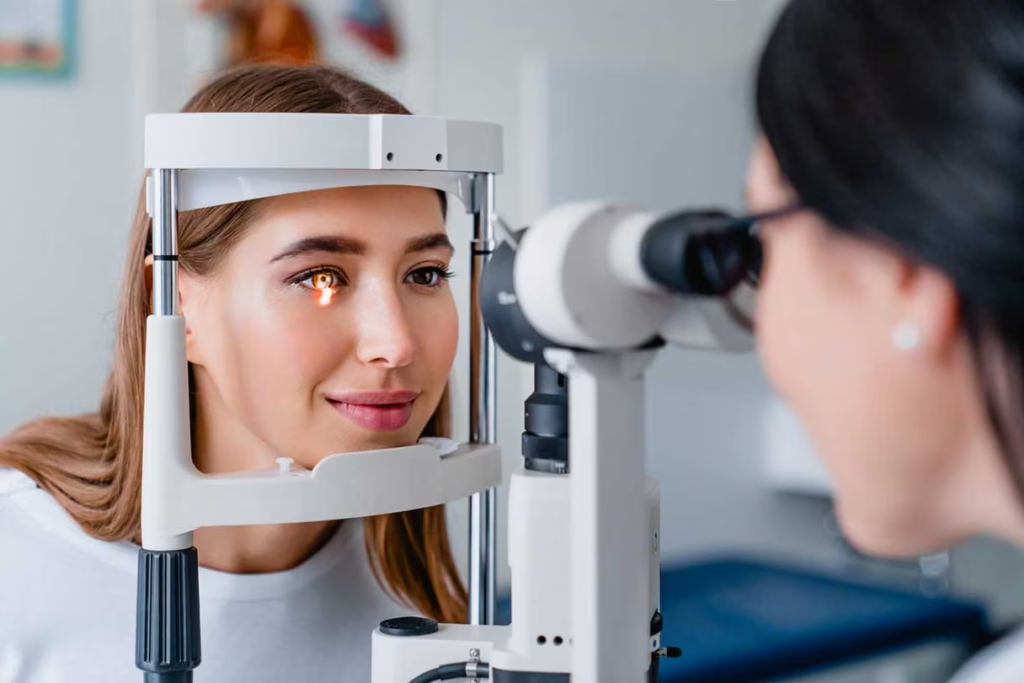
Visit Ebsaar Eye Clinic in Dubai for advanced laser vision correction delivered by experienced specialists using modern diagnostic and laser technology. With comprehensive pre- and post-treatment care, the clinic focuses on safety, precision, and personalized outcomes. Book your consultation now to receive a detailed eye assessment and expert guidance tailored to your vision needs.
Quick Links
- What Is Laser Vision Correction?
- What Is LASIK Eye Surgery?
- Who Is a Good Candidate for LASIK Surgery?
- What Happens During LASIK Eye Surgery?
- Understanding the Risks and Side Effects
- Preparing for Your LASIK Eye SurgeryJourney
- Types of LASIK Eye Surgeries
- Photorefractive Keratectomy (PRK)
- Small Incision Lenticule Extraction (SMILE)
- Understanding LASIK Eye Surgery Cost
- Great External Resources for LASIK
- Frequently Asked Questions (FAQs)
What Is Laser Vision Correction?
A Complete Guide to LASIK Eye Surgery in Dubai
Laser vision correction refers to a group of advanced surgical procedures designed to improve vision by reshaping the cornea so light focuses correctly on the retina. These treatments correct common refractive errors such as nearsightedness, farsightedness, and astigmatism.
LASIK eye surgery is the most well-known form of laser vision correction, but it is not the only option. Depending on your eye anatomy, lifestyle, and visual goals, alternative procedures may be recommended to ensure the safest and most effective outcome.
Common laser vision correction procedures include:
What Is LASIK Eye Surgery?
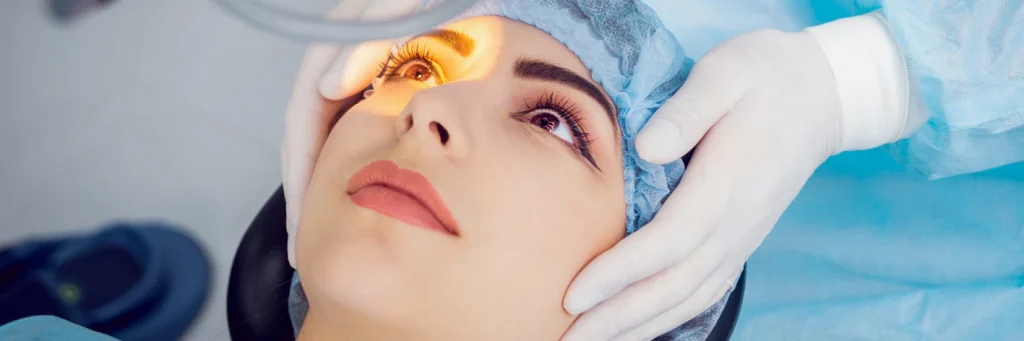
LASIK surgery is a highly advanced laser procedure designed to reduce or eliminate dependence on glasses or contact lenses. Clear vision occurs when light passes through the eye and focuses precisely on the retina. When the eye’s shape prevents proper focus—known as a refractive error—vision becomes blurred.
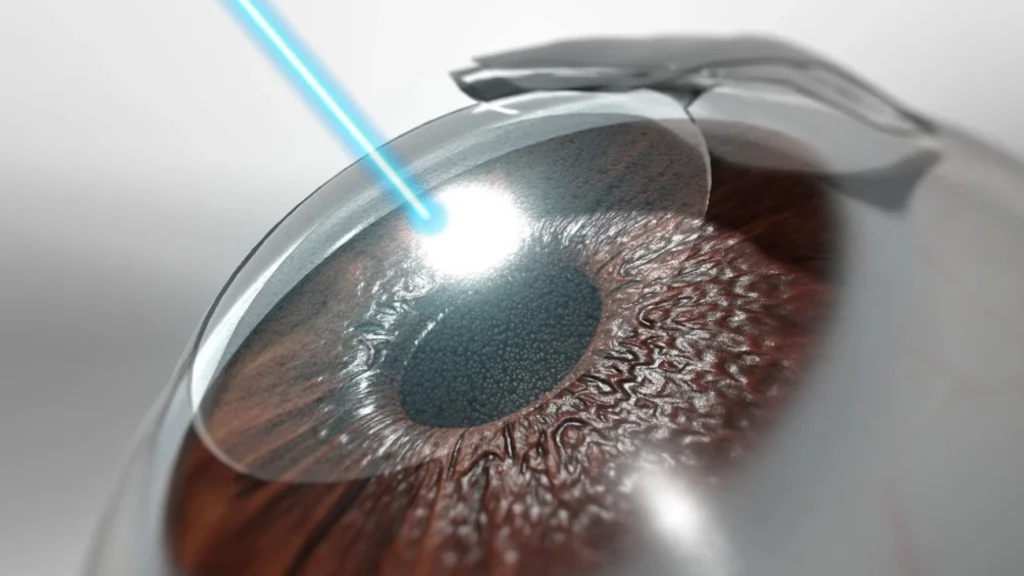
During LASIK eye surgery, advanced laser technology is used to gently reshape the cornea. This allows light to focus accurately on the retina, resulting in sharper, clearer vision. LASIK eye surgery is highly effective in treating myopia, hyperopia, and astigmatism, helping many patients enjoy long-term visual freedom.
For patients considering LASIK surgery in Dubai, modern technology and customized treatment planning ensure excellent safety and precision.
Who Is a Good Candidate for LASIK Eye Surgery in Dubai?
LASIK is highly effective, but it is not suitable for everyone. A detailed eye examination is essential before proceeding with LASIK eye surgery Dubai patients are considering.
Is LASIK Right for You?
LASIK is not a one-size-fits-all procedure. Determining whether LASIK eye surgery is right for you begins with a comprehensive eye examination.
The Ideal Candidate
Generally, you may be a great candidate for LASIK eye surgery if:
You have reached ocular maturity: You are at least 18 years old, though we often recommend waiting until 21 to ensure your eyes have finished developing.
Your vision is stable: Your prescription hasn’t changed significantly in the past 12 months.
Your eyes are healthy: You have sufficient corneal thickness and no active eye diseases.
You know what to expect: You have a clear understanding of the procedure’s benefits and limitations.
When LASIK Eye Surgery Might Not Be Suitable
To ensure the best results, we may recommend alternative treatments if you have:
Prescriptions that change frequently (refractive instability).
Corneas that are too thin, cone-shaped (Keratoconus), or scarred.
Severe dry eye syndrome or advanced glaucoma.
Cataracts that are currently affecting your vision.
Uncontrolled diabetes or a history of specific eye infections.
Your Comprehensive Evaluation
The only way to know for sure is through a comprehensive exam. Your surgeon will map your corneal shape, measure your refractive error, and assess your overall eye health to create a personalized treatment plan.
What Happens During LASIK Eye Surgery in Dubai?
Before: The Blueprint
Every eye is unique. Before lasik eye surgery, we use advanced topography technology to map the surface of your cornea. This data is used to guide the laser, ensuring a custom treatment plan. We also verify that your prescription is stable and that your eyes are healthy enough for the procedure.
During: The Transformation
LASIK eye surgery is an outpatient procedure that typically takes less than 15 minutes for both eyes.
Numbing: Anesthetic drops ensure you feel no pain.
Access: A thin corneal flap is created and lifted.
Reshaping: A cool-beam laser gently reshapes the corneal tissue to correct your refractive error.
Healing: The flap is replaced and bonds naturally without stitches.
After: The Recovery
Most patients notice improved vision immediately, though clarity will fluctuate as you heal. You may experience a “sand in the eye” sensation for the first few hours. We recommend sleeping with protective shields for the first night to prevent accidental rubbing.
Vision Results After LASIK Eye Surgery in Dubai
Approximately 90% of patients achieve vision between 20/20 and 20/40 without glasses or contact lenses following LASIK surgery. While the LASIK eye surgery corrects distance vision, it does not prevent age-related near vision changes (presbyopia), which may require reading glasses later in life.
Understanding the Risks and Side Effects
While LASIK is one of the most studied and successful elective procedures available, like any surgery, it comes with potential risks. Most patients experience minor side effects that act as a natural part of the healing process.
Common, Temporary Side Effects
During the first few weeks of recovery, it is normal to experience:
Dryness: A “scratchy” sensation is common; we provide medicated drops to keep your eyes comfortable.
Visual Fluctuations: Your vision may shift slightly throughout the day as the eye stabilizes.
Night Vision Changes: You may notice glare, halos, or “starbursts” around headlights or streetlamps.
Cosmetic Redness: Small, harmless red spots may appear on the white of the eye; these are simply minor bruises that fade quickly.
Long-Term Considerations
In rare instances, side effects like dry eye or night glare can persist. There is also the possibility of under-correction or over-correction, which can usually be refined with a follow-up procedure or a light prescription. Though extremely rare, serious complications such as infection or a decrease in best-corrected vision can occur. During your consultation, we will perform a rigorous screening to ensure these risks are minimized for your specific eye profile.
Preparing for Your LASIK Journey
Choosing LASIK is a life-changing decision, and we want you to feel confident every step of the way. Achieving the best possible outcome starts with being an informed patient. Before your procedure, we encourage you to explore how LASIK works, the benefits it offers, and the realistic milestones of your future vision. Use the resources below to prepare for your consultation—we look forward to answering any questions you may have about your unique path to clearer sight.
Types of LASIK Surgery Dubai
There are several laser vision correction techniques available today. Each approach is designed for different eye characteristics and visual needs. During your consultation, your ophthalmologist will recommend the most appropriate option based on your eye health, prescription, and lifestyle.
A method that represents the modern gold standard in refractive surgery. While traditional LASIK utilizes a mechanical blade (microkeratome) to access the treatment area, Femto-LASIK is an all-laser, bladeless procedure that offers unparalleled precision, safety, and predictability.
Refractive errors—such as Myopia (nearsightedness), Hyperopia (farsightedness), and Astigmatism—occur when the eye cannot properly focus light onto the retina. Femto-LASIK corrects this by precisely reshaping the cornea in a two-step laser process:
Flap Creation: A specialized femtosecond laser uses ultra-fast light pulses to create a microscopic, customized flap on the corneal surface.
Vision Correction: An excimer laser then reshapes the underlying corneal tissue to correct the patient’s specific prescription. The flap is then repositioned, where it adheres naturally without the need for sutures.
Determining Candidacy
To ensure the highest safety standards, an ideal candidate for Femto-LASIK should meet the following criteria:
Age: 18 years or older.
Stability: A stable vision prescription for at least one year.
Health: Generally healthy eyes with sufficient corneal thickness.
Lifestyle: Realistic expectations regarding the outcome and recovery process.
Certain conditions, such as advanced glaucoma, keratoconus, or uncontrolled diabetes, may require alternative treatments. Our specialists will conduct a comprehensive evaluation to confirm your eligibility.
The Surgical Experience
Femto-LASIK is a swift, outpatient procedure typically completed within 30 minutes.
Comfort: The eye is thoroughly numbed with anesthetic drops; a mild sedative may be provided to ensure relaxation.
Precision: A computer-guided laser system maps the eye’s unique architecture to guide the reshaping process.
Sensation: While patients may feel a slight pressure during the flap creation, the procedure is generally painless.
Recovery and Aftercare
The healing process for Femto-LASIK is remarkably efficient, with most patients noticing a significant improvement in clarity within 24 hours.
Immediate Post-Op Care:
Protection: You will wear a clear eye shield for the first night to prevent accidental rubbing.
Medication: Medicated drops will be prescribed to prevent infection and maintain moisture.
Rest: We recommend resting for the remainder of your surgery day.
Activity Timeline:
1–3 Days: Most patients return to work and light activities.
1–2 Weeks: Avoid swimming, hot tubs, and eye makeup.
4 Weeks: High-impact or contact sports can usually be resumed.
Safety and Expectations
While Femto-LASIK has an exceptional success rate, it is important to be aware of the standard healing phase. Temporary symptoms—such as light sensitivity, “halos” around lights, or dry eye sensations—usually resolve within a few weeks. Modern Femto technology significantly reduces the risks associated with manual blades, offering a safer, more accurate path to visual independence.
A cutting-edge, one-step surface treatment that represents the next generation of laser vision correction. As a completely non-contact procedure, it combines the benefits of traditional surface treatments with the speed and precision of advanced robotic technology, eliminating the need for surgical blades or corneal flaps.
StreamLight is a “Trans-Epithelial” treatment, meaning the laser works directly through the surface of the eye.
Non-Contact Precision: Using a high-frequency robotic excimer laser, the system gently removes the epithelium (the eye’s thin outer layer) and reshapes the underlying cornea in a single, continuous step.
No Mechanical Intervention: Because the laser performs all aspects of the surgery, there is no physical contact with the eye by surgical instruments, minimizing trauma and preserving the eye’s natural structural integrity.
Ideal for Thin Corneas: StreamLight is often the preferred choice for patients whose corneal anatomy may not be suitable for traditional LASIK.
Maximized Safety: By avoiding the creation of a flap, StreamLight eliminates flap-related complications and reduces the risk of long-term corneal instability.
Enhanced Comfort: The procedure is painless, performed under local anesthetic drops, and completed in a matter of minutes.
Rapid Surface Healing: The advanced laser algorithm promotes faster epithelial regrowth, allowing patients to return to their normal routines within 2–3 days.
Determining Candidacy
StreamLight is an effective solution for a wide range of refractive errors:
Myopia (Nearsightedness)
Hyperopia (Farsightedness)
Astigmatism
A comprehensive ophthalmological evaluation is required to map your eye’s surface and ensure that this non-contact approach is the optimal choice for your vision goals.
Preparing for Your Procedure
To achieve the highest degree of accuracy and the best possible outcome, we recommend the following preparations:
Contact Lens Holiday: Discontinue contact lens wear for at least one week prior to your exam to allow the cornea to return to its natural shape.
Day of Surgery: Ensure your face is free of makeup, creams, or perfumes.
Systemic Health: Avoid alcohol for 24 hours before surgery and ensure you are well-rested.
Transportation: Arrange for a loved one to drive you home, as your vision may be temporarily hazy.
Recovery and Aftercare
While the “no-touch” approach accelerates healing, following a strict aftercare regimen is vital for the best results:
Protection: Avoid rubbing your eyes or getting water in them (including pools and saunas) for the first week.
Hydration: Use the prescribed medicated and moisturizing drops exactly as directed to support the healing tissue.
Activity: Limit strenuous exercise and contact sports for at least one week.
Follow-ups: Attend all scheduled post-operative checks to monitor the stabilization of your vision.
A method represents an elite evolution in laser vision correction, designed for patients who demand the highest levels of precision and customized results. By utilizing advanced 3D corneal mapping and high-speed eye-tracking technology, Ultra LASIK offers a degree of accuracy that goes beyond traditional procedures, tailoring the treatment to the microscopic uniqueities of your visual profile.
Ultra LASIK is a 100% bladeless, computer-guided procedure that utilizes a sophisticated “dual-laser” platform to achieve superior visual outcomes:
Wavefront Mapping: Before surgery, the system creates a high-resolution 3D map of your eye. This “optical fingerprint” identifies even the smallest imperfections in your cornea.
Dual-Laser Precision: A femtosecond laser creates a precise, customized corneal flap, followed by an excimer laser that reshapes the cornea based on your personalized 3D map.
Real-Time Tracking: An advanced eye-tracker monitors your eye position thousands of times per second, automatically adjusting the laser to ensure perfect alignment throughout the entire process.
Microscopic Accuracy: The integration of real-time tracking and 3D mapping minimizes the risk of human error and ensures the most accurate correction possible.
Rapid Visual Recovery: Most patients experience significantly sharper vision within the first 24 hours, returning to work and daily life in as little as 1–2 days.
Enhanced Comfort: The bladeless approach and ultra-thin flap design result in a more comfortable surgical experience and a gentler healing process.
Long-Term Stability: By creating a highly stable and customized corneal shape, Ultra LASIK provides clear, reliable vision that stands the test of time.
Determining Candidacy
Ultra LASIK is often recommended for patients seeking the most advanced treatment for nearsightedness, farsightedness, or astigmatism. You may be a candidate if you meet the following:
Age: Between 18 and 50 years old.
Stability: A vision prescription that has remained unchanged for at least one year.
Ocular Health: Adequate corneal thickness and a healthy tear film (assessed during your pre-operative evaluation).
Even patients who were previously told they were borderline candidates for LASIK may qualify for Ultra LASIK due to its specialized tissue-saving technology.
The Surgical Experience
Ultra LASIK is a comfortable, outpatient procedure that generally takes less than 15 minutes per eye.
Numbing: Your eyes are fully anesthetized with medical-grade drops.
Laser Calibration: The laser is programmed with your unique 3D map data.
Treatment: You will focus on a target light while the laser performs the correction. You may hear a soft clicking sound as the system works to improve your vision.
Recovery and Aftercare
Because Ultra LASIK is so precise, the recovery period is exceptionally smooth:
Immediate Care: Use the prescribed antibiotic and lubricating drops to keep the eyes hydrated and prevent infection.
Initial Protection: Wear sunglasses outdoors to manage temporary light sensitivity and avoid rubbing your eyes.
Activity: Most patients can resume normal activities within 48 hours, though we recommend avoiding swimming and dusty environments for at least one week.
Monitoring: Scheduled follow-up visits will ensure your eyes are stabilizing correctly and your vision is reaching its full potential.
An advanced refractive procedure that bridges the gap between LASIK eye surgery and surface treatments like PRK. It is specifically engineered for patients whose corneal anatomy—such as naturally thin tissue—precludes them from traditional LASIK eye surgery, providing a safer, more stable path to visual clarity.
The defining characteristic of Epi-LASIK is the creation of an ultra-thin epithelial flap, which is significantly thinner than a standard LASIK flap.
Mechanical Separation: Instead of using a laser or a sharp alcohol-assisted blade, the surgeon uses a specialized “epithelial separator.” This device uses a blunt, oscillating plastic edge to gently separate the outermost layer of the eye (the epithelium) from the underlying stroma.
Alcohol-Free Technique: Unlike LASEK, Epi-LASIK typically avoids the use of alcohol solutions. This preserves the vitality of the epithelial cells and can lead to a more biological healing process.
Laser Reshaping: Once the epithelial flap is moved aside, an excimer laser reshapes the corneal stroma to correct the refractive error, identical to the correction step in LASIK eye surgery.
Bandage Protection: After the treatment, the thin flap is replaced, and a specialized “bandage” contact lens is applied to protect the surface and facilitate the growth of new cells.
Corneal Preservation: Because the flap is restricted to the epithelium, it preserves the maximum amount of structural corneal tissue (the stroma), making it the gold standard for patients with thin corneas.
Increased Structural Safety: With no deep permanent flap, there is virtually no risk of flap displacement. This makes it a preferred option for individuals in high-impact professions, such as athletes, police officers, or military personnel.
Minimized Toxicity: By avoiding alcohol-based tissue loosening, Epi-LASIK reduces the risk of chemical irritation to the eye surface, promoting a more natural recovery.
Reduced Discomfort: Patients generally report less postoperative discomfort compared to traditional PRK or LASEK.
Determining Candidacy
Epi-LASIK is a specialized solution often recommended when traditional LASIK eye surgery is not the optimal choice. You may be a candidate if you have:
Thin Corneas: Insufficient tissue for a standard LASIK flap.
High-Impact Lifestyle: A career or hobby that involves a high risk of eye trauma.
Standard Refractive Errors: Myopia, hyperopia, or astigmatism that requires precise correction.
The Surgical Experience
Epi-LASIK is an outpatient procedure that prioritizes safety and tissue integrity.
Preparation: The eye is numbed with anesthetic drops to ensure the separation process is comfortable.
Separation: The epithelial separator creates the microscopic flap in seconds.
Correction: The laser reshapes the eye in a matter of minutes.
Bandage Application: The protective contact lens is placed, which will stay in the eye for several days until the surface has sufficiently regenerated.
Recovery and Aftercare
Recovery for Epi-LASIK is more gradual than traditional LASIK eye surgery, as the surface layer requires time to regenerate fully.
Visual Milestones: While many patients achieve 20/40 or 20/20 vision within the first week, full stabilization of the visual result may take three to six months.
Medication: Adherence to a strict regimen of prescribed eye drops is critical to ensure the quality of the final vision and proper healing.
Follow-up: Your surgeon will remove the bandage contact lens during an early follow-up visit, typically 3–5 days after the procedure.
Driving: Most patients can resume driving within approximately one week, once the epithelium has smoothed over the central vision area.
A foundational laser vision correction procedure and a primary alternative to LASIK eye surgery. It is a “surface treatment,” meaning it corrects vision by reshaping the cornea without creating a surgical flap. This makes it an exceptionally stable and safe option for patients with specific anatomical needs or highly active lifestyles.
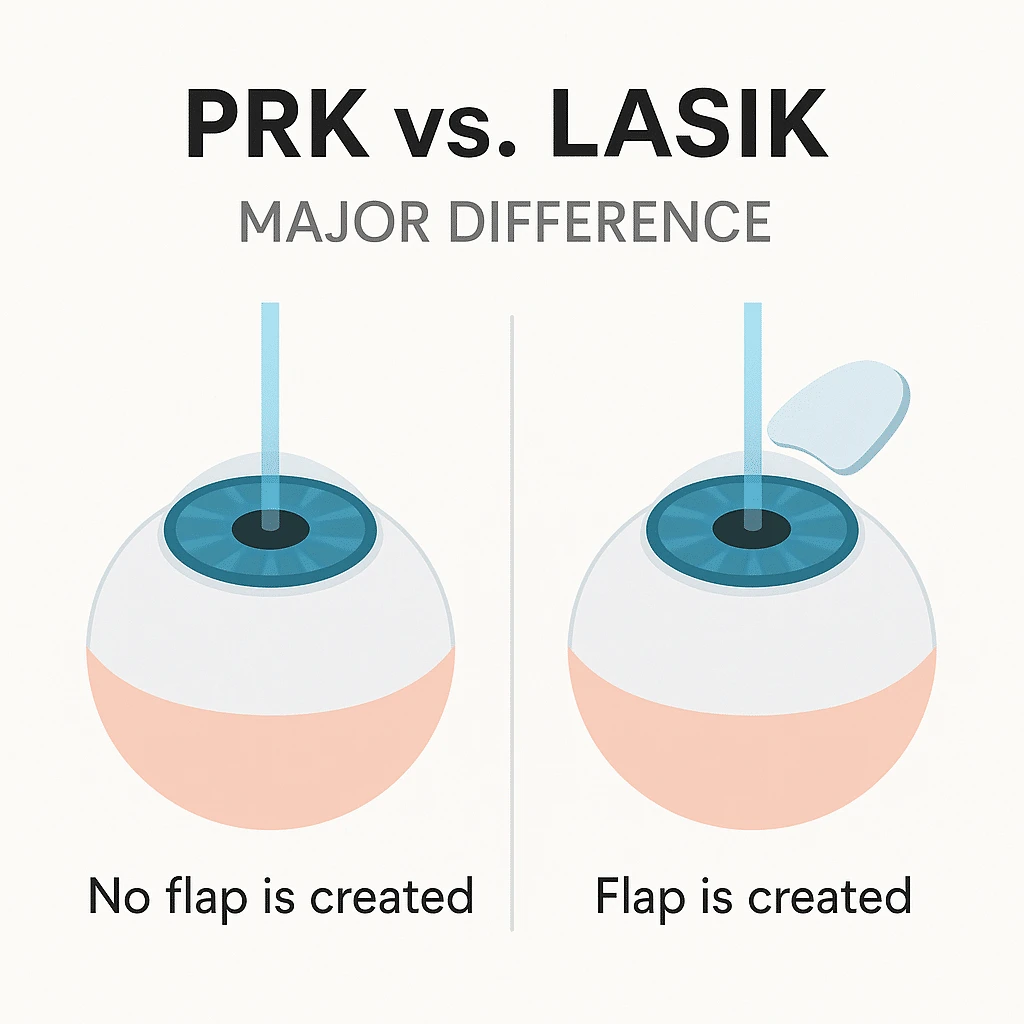
While LASIK eye surgery involves creating a flap to reach the inner corneal tissue, PRK works directly on the surface:
Epithelial Removal: The surgeon gently removes the epithelium, the thin protective outer layer of the cornea. This can be done using a specialized brush, a precise blade, or a diluted alcohol solution.
Laser Reshaping: An excimer laser—programmed with a custom map of your eye—removes microscopic amounts of tissue to correct the curvature of the cornea.
Protective Healing: Because there is no flap to reposition, a clear “bandage” contact lens is placed over the eye to protect the surface while the epithelial cells naturally regrow.
Corneal Thickness: Since no flap is required, PRK preserves more corneal tissue than LASIK eye surgery, making it the ideal choice for patients with thin corneas.
Structural Integrity: Without a flap, there is zero risk of flap-related complications. This is a critical advantage for those in high-contact professions or sports (such as boxing, martial arts, or military service).
High-Precision Results: PRK offers visual outcomes comparable to LASIK eye surgery, effectively treating myopia (nearsightedness), hyperopia (farsightedness), and astigmatism.
Determining Candidacy
PRK is a versatile procedure, but successful outcomes depend on meeting specific health standards:
Age and Stability: Candidates should be 18 or older (preferably 21+) with a stable prescription for at least one year.
Eye Health: General ocular health must be good, with no active infections or advanced conditions like glaucoma or significant cataracts.
General Health: Candidates should not have systemic conditions that impede healing, such as uncontrolled diabetes or certain autoimmune diseases.
The Surgical Experience
A typical PRK procedure is a quick, outpatient experience lasting approximately 15 minutes:
Comfort: Numbing drops are applied to ensure you feel no pain during the procedure.
Focus: You will be asked to look at a target light while the laser performs the reshaping. You may hear a rhythmic clicking sound as the laser works.
Bandage: The procedure concludes with the application of a therapeutic contact lens.
Recovery and Aftercare
Recovery from PRK is a gradual process as the outer layer of the cornea regenerates:
Initial Healing (Days 1–5): It is normal to experience some discomfort or a “gritty” sensation for the first 48 to 72 hours. Your vision will be blurry during this phase as the epithelium regrows.
Visual Progression: Significant improvement usually occurs within the first week, though it can take several weeks to a month to reach your peak visual results.
Protection: It is vital to wear sunglasses outdoors as directed to prevent sun-induced scarring (haze) and to use all prescribed medicated drops to support the healing process.
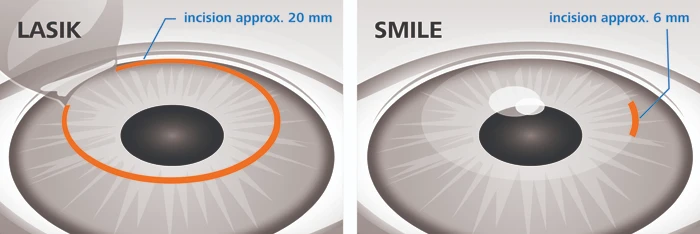
The most recent breakthrough in laser vision correction. As a “flapless” procedure, it combines the structural benefits of PRK with the rapid recovery of LASIK eye surgery. By using a single, high-precision femtosecond laser, SMILE reshapes the cornea through a tiny “keyhole” incision, making it a premier choice for patients with active lifestyles or those prone to dry eyes.
The SMILE procedure is fundamentally different from traditional LASIK eye surgery because it corrects vision from within the cornea rather than on the surface:
Lenticule Creation: A computer-guided femtosecond laser sculpts a thin, disc-shaped layer of tissue (the “lenticule”) inside the middle layers of the cornea. This step takes approximately 30 seconds.
Keyhole Incision: The same laser creates a microscopic incision (less than 4mm) on the corneal surface.
Lenticule Removal: The surgeon gently removes the lenticule through this small opening. By removing this specific amount of tissue, the cornea is reshaped to focus light perfectly onto the retina.
Flapless Technology: Since no large corneal flap is created, there is zero risk of “flap displacement.” This provides peace of mind for athletes, military personnel, and those in physically demanding careers.
Superior Comfort & Dry Eye Safety: SMILE is minimally invasive, leaving the majority of the corneal surface and its sensitive nerves intact. This significantly reduces the incidence of post-surgical dry eye.
Biomechanical Stability: By keeping the upper layers of the cornea strong and undisturbed, the eye maintains more of its natural structural integrity.
Quiet & Gentle: The procedure is fast, nearly silent, and performed entirely with one laser platform.
Determining Candidacy
SMILE is FDA-approved for the treatment of Myopia (nearsightedness) and Astigmatism. You may be an ideal candidate if:
Age: You are 22 years or older.
Prescription: Your nearsightedness is between -1.00 and -10.00 diopters, with up to 3.00 diopters of astigmatism.
Stability: Your eye prescription has been stable for at least 12 months.
Health: You have healthy corneas and no history of uncontrolled diabetes or advanced glaucoma.
The Surgical Experience
SMILE is an outpatient procedure that typically takes only 10 to 15 minutes for both eyes:
Numbing: Anesthetic drops are used to ensure the eye is fully numbed; an eyelid holder is used to prevent blinking.
Stabilization: A gentle suction ring keeps the eye steady while the laser works.
Procedure: You will focus on a target light while the laser creates the lenticule. Most patients report feeling only a slight pressure during this phase.
Recovery and Aftercare
Because the surface incision is so small, the “keyhole” heals very quickly:
Day 1: Most patients return to their normal daily activities within 24 to 48 hours. You should plan to rest and take a nap immediately following the procedure.
Medication: You will be prescribed antibiotic and anti-inflammatory eye drops to support the healing process.
Activity: While you should avoid getting water directly in your eyes for a few days, you can generally resume exercise and sports much sooner than with traditional LASIK eye surgery.
Visual Clarity: Vision may be slightly hazy immediately after surgery but typically improves significantly within a few days, with full stabilization over the following weeks.
Understanding LASIK Eye Surgery Cost
Many patients ask about LASIK eye surgery cost, and it’s important to understand that pricing is not one-size-fits-all.
LASIK eye surgery cost depends on the type of procedure recommended, the technology used, and your individual eye condition. Because every eye is unique, the most accurate way to determine suitability and cost is through a personalized consultation.
To learn more about your options and receive a customized treatment plan, we recommend booking a consultation with our specialists.
Frequently Asked Questions (FAQs)
Who invented LASIK eye surgery?
Modern laser-based vision correction evolved through the combined work of multiple scientists and ophthalmologists rather than a single inventor. The foundations were laid in the mid-20th century with the development of corneal reshaping techniques. In the 1980s, researchers refined the use of excimer lasers, which could precisely remove microscopic amounts of corneal tissue without damaging surrounding areas. This breakthrough allowed vision errors to be corrected with unprecedented accuracy.
Later, surgeons combined excimer laser reshaping with corneal flap techniques, creating the procedure widely known today. Over decades, improvements in laser precision, eye tracking, and diagnostic imaging transformed it into a safe and predictable treatment. Today’s techniques are the result of global collaboration, clinical research, and continuous technological advancement rather than the work of one individual.
Who is LASIK eye surgery for?
LASIK eye surgery is designed for adults who want long-term freedom from glasses or contact lenses. It is most suitable for individuals with stable vision who experience refractive errors such as nearsightedness, farsightedness, or astigmatism. People who lead active lifestyles, work long hours on screens, or feel limited by corrective eyewear often consider this option.
Candidates should have healthy eyes, adequate corneal thickness, and realistic expectations about results. It is not limited to a specific profession or age group, but it is intended for those seeking convenience and visual independence. A detailed evaluation at a qualified provider of LASIK eye surgery Dubai services helps determine whether the procedure aligns with a patient’s eye health and vision goals.
Who can get LASIK eye surgery?
Most adults over the age of 18 with stable vision may qualify for LASIK eye surgery, provided their eyes meet certain medical criteria. Suitable candidates typically have healthy corneas, no active eye infections, and refractive errors within treatable ranges. Stability of prescription for at least one year is an important requirement.
Eligibility also depends on factors such as corneal thickness, pupil size, tear production, and overall eye health. Certain conditions, including uncontrolled dry eye or corneal disease, may affect suitability. A comprehensive eye examination is essential to confirm candidacy. Reputable providers of LASIK eye surgery Dubai use advanced diagnostics to ensure the procedure is safe and appropriate for each individual.
Who should get LASIK eye surgery?
People who are frustrated with daily dependence on glasses or contact lenses and want a long-term solution often consider LASIK eye surgery. It is especially appealing to individuals with active lifestyles, demanding careers, or hobbies where eyewear is inconvenient.
The ideal candidate understands both the benefits and limitations of the procedure. While many achieve excellent vision, results depend on individual eye anatomy and healing. Those who are willing to follow post-procedure care instructions and attend follow-up visits tend to have the best outcomes. Consulting experienced specialists offering LASIK eye surgery Dubai ensures expectations are realistic and safety is prioritized throughout the process.
Can LASIK eye surgery fix astigmatism?
Yes, LASIK eye surgery is commonly used to correct astigmatism. Astigmatism occurs when the cornea has an irregular shape, causing blurred or distorted vision. The procedure reshapes the cornea so light focuses evenly on the retina, improving clarity at various distances.
Modern laser technology allows for highly precise correction, even in cases of moderate to higher astigmatism. Success depends on accurate corneal mapping and proper patient selection. Many patients experience significant improvement and reduced reliance on corrective lenses. Providers offering LASIK eye surgery Dubai use advanced diagnostic tools to plan customized treatments that address individual corneal irregularities effectively.
Can LASIK eye surgery go wrong?
Like any medical procedure, LASIK eye surgery carries some risks, though serious complications are uncommon when performed on suitable candidates. Temporary effects such as dryness, glare, light sensitivity, or fluctuating vision may occur during healing and usually improve over time.
Rare complications can include infection, inflammation, or under- or over-correction. Most risks are minimized through careful screening, modern laser technology, and strict adherence to aftercare instructions. Choosing an experienced provider of LASIK eye surgery Dubai and attending all follow-up visits significantly reduces the likelihood of complications and supports optimal outcomes.
Can LASIK eye surgery fix a lazy eye?
Laser vision correction does not directly treat a lazy eye, also known as amblyopia. This condition usually develops in childhood when the brain favors one eye over the other, leading to reduced vision that is not caused by focusing errors alone. While correcting refractive errors may improve clarity in the affected eye, it does not retrain the brain’s visual processing.
In some cases, improving overall vision balance may provide functional benefits, but it is not considered a cure. Treatment for amblyopia typically involves early intervention methods such as patching, vision therapy, or corrective lenses during childhood. Adults should consult specialists to understand realistic expectations.
Can LASIK eye surgery be covered by insurance?
Most insurance plans consider laser-based vision correction an elective procedure rather than a medical necessity. Because glasses and contact lenses are viewed as adequate alternatives, coverage is often limited or excluded. However, some plans may offer partial reimbursement, discounts, or flexible spending benefits.
Coverage policies vary widely, so reviewing plan details is essential. In some cases, employer-sponsored benefits or vision plans provide reduced rates through partnered providers. While full coverage is uncommon, financial options may still be available. It’s best to verify directly with the insurance provider to understand eligibility and potential savings.
Can LASIK eye surgery be reversed?
The corneal tissue removed during laser vision correction cannot be restored, so the procedure itself is not reversible. However, enhancement treatments may be possible if vision changes over time and the cornea remains healthy. These adjustments fine-tune the initial result rather than undo it.
Because reversibility is not possible, careful screening and conservative treatment planning are critical. Surgeons aim for long-term stability rather than aggressive correction. Understanding this permanence helps patients make informed decisions and ensures expectations align with medical realities.
Can LASIK eye surgery be done twice?
In some cases, LASIK eye surgery can be repeated as an enhancement if vision changes or if the initial correction was incomplete. Whether a second procedure is possible depends on corneal thickness, healing response, and overall eye health.
Enhancements are less common today due to improved precision in modern treatments. When needed, they are carefully planned to maintain corneal safety. A detailed evaluation by an experienced LASIK eye surgery Dubai provider determines whether additional correction is appropriate and safe.
Can LASIK eye surgery change your eye color?
No, laser vision correction does not alter eye color. Eye color is determined by pigmentation in the iris, which is not affected during the procedure. Treatment is focused exclusively on reshaping the cornea, the clear front surface of the eye.
Any temporary changes in appearance, such as redness or mild swelling, resolve during healing. Claims suggesting permanent color change are inaccurate. Eye color remains exactly the same before and after treatment.
Can LASIK eye surgery cause glaucoma?
Laser-based vision correction does not cause glaucoma. However, temporary increases in eye pressure can occur during the procedure due to suction used for stabilization. These pressure changes are brief and typically harmless for healthy eyes.
People with existing glaucoma or high risk may require special evaluation. Additionally, corneal reshaping can affect pressure measurements, so future readings must be interpreted correctly. Regular eye exams ensure ongoing eye health and accurate monitoring.
Can LASIK eye surgery fix myopia?
LASIK eye surgery is one of the most effective treatments for myopia, or nearsightedness. The procedure reshapes the cornea so light focuses directly on the retina, allowing clearer distance vision. It is widely performed for mild, moderate, and certain high levels of myopia.
Most patients experience rapid improvement and long-lasting results, especially when their prescription has been stable. While the correction itself is permanent, natural age-related changes can still occur later in life. A thorough assessment by a qualified provider of LASIK eye surgery Dubai ensures that the level of myopia can be safely and accurately corrected.
Can LASIK eye surgery cause cancer?
No scientific evidence links laser vision correction to cancer. The lasers used do not cause DNA damage or radiation exposure associated with cancer risk. They operate with controlled light energy that affects only surface corneal tissue.
Decades of research and millions of procedures worldwide support its safety. Concerns about cancer are unfounded and not supported by medical data.
Can LASIK eye surgery cause cataracts?
Cataracts form in the eye’s natural lens, which is not affected during laser vision correction. The procedure works on the cornea, leaving internal eye structures untouched.
Cataracts develop primarily due to aging, genetics, or metabolic factors. Undergoing laser vision correction does not increase cataract risk or accelerate their development.
Can LASIK eye surgery help glaucoma?
Laser vision correction does not treat glaucoma. Glaucoma involves damage to the optic nerve, often related to eye pressure, and requires medical or surgical management.
While the procedure does not improve glaucoma, individuals with well-controlled conditions may still be evaluated for suitability. Ongoing monitoring is essential, as corneal changes can influence pressure measurements. Management of glaucoma remains a separate medical process.
How is LASIK eye surgery done?
LASIK eye surgery is performed using advanced laser systems guided by detailed eye measurements. After numbing drops are applied, a thin corneal layer is gently prepared, and a laser reshapes the underlying tissue based on the patient’s prescription. The process is computer-controlled for accuracy and safety.
The procedure is quick, typically lasting only a few minutes per eye, and patients remain awake throughout. Most people return home the same day and notice vision improvement within a short period. Clinics offering LASIK eye surgery Dubai rely on modern diagnostics and eye-tracking technology to enhance precision and comfort.
How long does LASIK eye surgery last?
The vision correction achieved through LASIK eye surgery is permanent because the corneal reshaping does not reverse. Most patients enjoy clear vision for many years without needing glasses or contact lenses for distance tasks.
However, natural aging changes such as presbyopia can still develop over time, affecting near vision. These changes are unrelated to the procedure itself. Long-term results depend on factors such as prescription stability and eye health. Regular eye exams with providers of LASIK eye surgery Dubai help monitor vision and maintain long-term eye health.