





Photorefractive Keratectomy, commonly known as PRK, is one of the earliest and most established forms of laser vision correction. Long before flap-based procedures became popular, this surface laser technique helped millions of people worldwide improve their eyesight and reduce reliance on glasses or contact lenses.
Despite the evolution of refractive technology, it remains a highly relevant option in modern eye care—especially for individuals with thin corneas, physically active lifestyles, or specific anatomical considerations. In advanced ophthalmology settings, including leading eye clinic Dubai facilities, like Ebsaar, it continues to deliver reliable long-term visual results supported by decades of clinical evidence.
This in-depth guide explores how PRK works, who it is best suited for, what recovery looks like, and how it compares with LASIK and other laser-based vision correction procedures.
What Is Photorefractive Keratectomy (PRK)?
It is a type of refractive eye procedure that uses an excimer laser to correct common vision problems caused by refractive errors. These errors occur when the eye is unable to properly focus light onto the retina, resulting in blurred or distorted vision.
This surface-based laser treatment is commonly used to correct:
- Nearsightedness (myopia)
- Farsightedness (hyperopia)
- Astigmatism
The goal is to gently reshape the cornea—the clear front surface of the eye—so incoming light is focused accurately. When this focusing issue is corrected, vision becomes sharper and clearer.
For many patients, it significantly reduces dependence on corrective lenses. In some cases, everyday activities can be performed comfortably without glasses or contact lenses.
PRK Compared to LASIK Eye Surgery

PRK and LASIK are both designed to improve vision using laser technology, but they differ in how the cornea is accessed during treatment.
With LASIK, a thin flap is created in the cornea to allow the laser to reshape the underlying tissue. PRK, by contrast, is performed directly on the surface of the cornea without creating a flap.
Because no flap is involved, it preserves more corneal tissue and avoids flap-related risks. This distinction makes it a valuable alternative for patients who may not be ideal candidates for flap-based laser procedures.s who may not be ideal LASIK candidates.
How Photorefractive Keratectomy Works
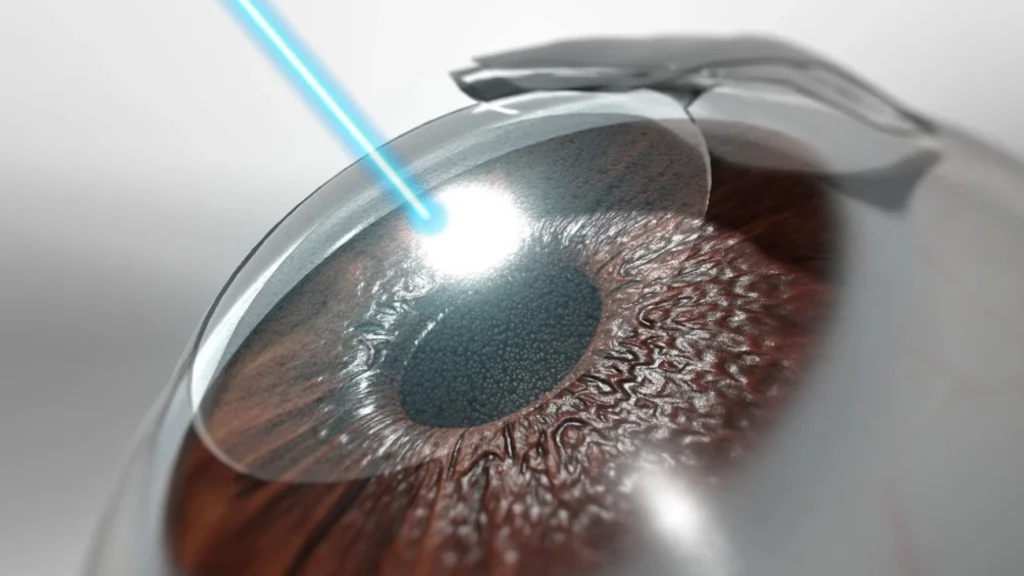
PRK improves vision by altering the curvature of the cornea so light rays entering the eye are properly focused on the retina.
The procedure involves three main stages:
Surface Preparation
The thin outer layer of the cornea, known as the epithelium, is gently removed using a specialized instrument, laser, or diluted solution.
Laser Reshaping
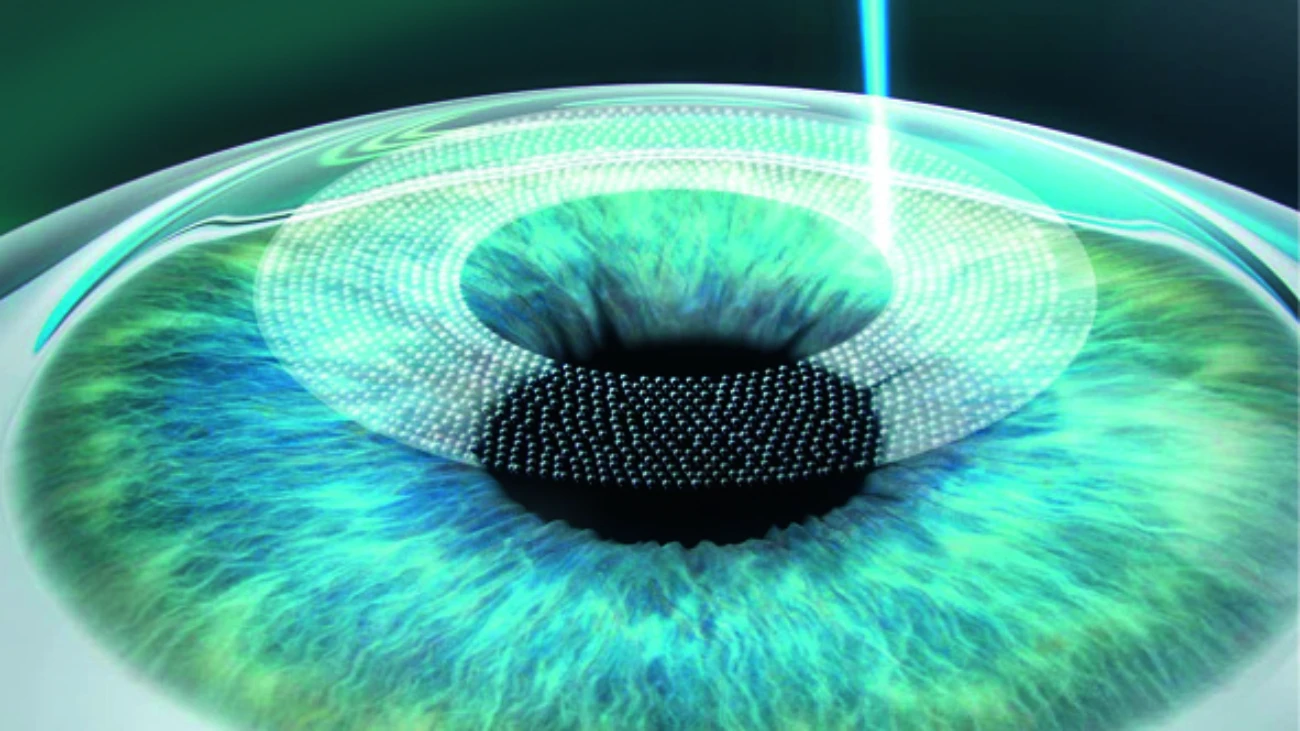
A computer-guided excimer laser removes microscopic amounts of corneal tissue based on precise measurements of the eye. This step corrects the refractive error.
Natural Healing
A soft bandage contact lens is placed to protect the eye while the surface layer regenerates naturally over several days.
Unlike LASIK, there is no corneal flap to reposition, which contributes to long-term structural stability once healing is complete.

Why PRK Is Still Widely Used Today
Although LASIK often receives more public attention, it continues to play a central role in laser vision correction. Many ophthalmologists still recommend PRK because of its predictability, long-term safety, and suitability for specific eye profiles.
In reputable eye clinic Dubai practices, like Ebsaar Eye Clinic, it is frequently selected when corneal thickness, lifestyle demands, or long-term eye health make surface treatment the preferred choice.
Who Is a Good Candidate for PRK?
It may be an excellent option if you meet certain criteria and have realistic expectations about the procedure and recovery process.
You May Be a Good Candidate If:
- You are 18 years or older (ideally over 21)
- Your vision prescription has been stable for at least one year
- Your refractive error can be corrected
- You have thin corneas
- Your overall eye health is good
- You lead an active lifestyle or work in a high-impact profession
- You understand what PRK can and cannot achieve
It is particularly well-suited for individuals who are not ideal candidates for LASIK surgery due to corneal thickness or occupational risks.
When PRK May Not Be Suitable
Some individuals may not be suitable candidates. These include people with:
- Unstable or changing vision prescriptions
- Corneal scars or corneal disease
- Advanced glaucoma
- Cataracts affecting vision
- Uncontrolled diabetes
- Certain autoimmune or skin conditions that impair healing
- A history of specific eye infections
- Pregnancy or nursing (temporary restriction)
A comprehensive evaluation by an ophthalmologist is the only way to determine whether it is safe and appropriate for you.
The Importance of an Ophthalmologist
Ophthalmologists are medical doctors with specialized surgical training in eye care. They are uniquely qualified to perform delicate procedures such as PRK and LASIK.
Beyond routine vision care, ophthalmologists diagnose and manage complex eye diseases and use advanced diagnostic tools to determine the most suitable laser vision correction procedure for each patient.
What Happens Before PRK Surgery?
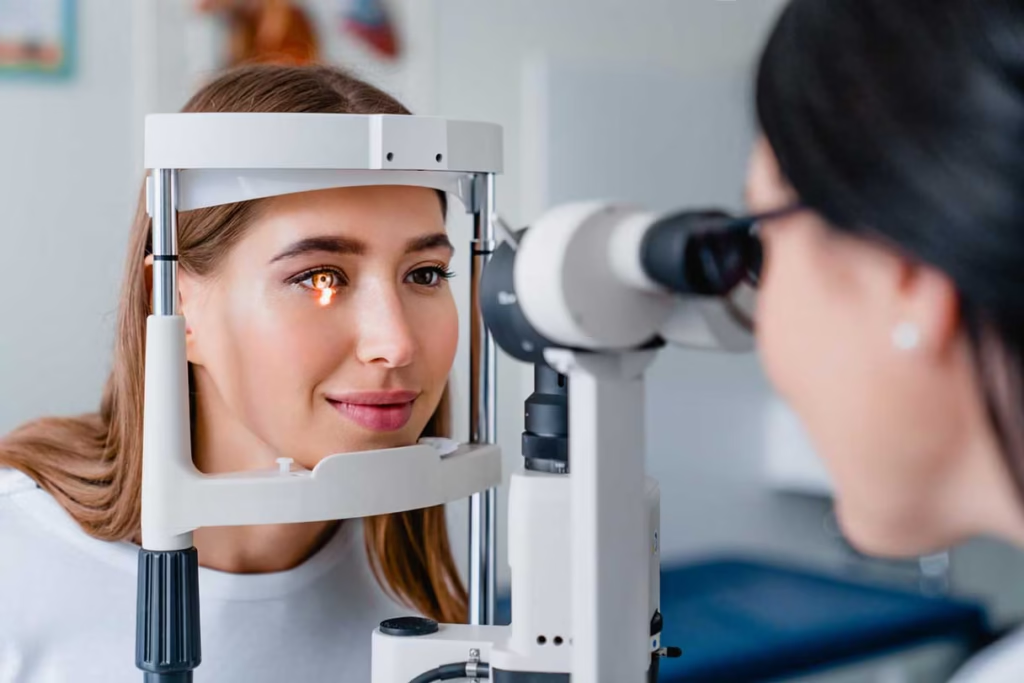
Your ophthalmologist will perform a detailed pre-operative assessment to ensure it is the right choice.
Pre-Surgery Evaluation Includes:
- Vision testing to confirm prescription stability
- Eye health assessment to rule out underlying conditions
- Corneal mapping and measurement to assess thickness and curvature
- Lifestyle discussion to understand your visual goals and expectations
This planning phase is critical for achieving accurate, personalized results.

What Happens During PRK Surgery?
It is an outpatient procedure and typically takes about 15 minutes.
During the Procedure:
- Numbing eye drops are applied for comfort
- An eyelid holder prevents blinking
- The epithelial layer is gently removed
- You focus on a target light while the laser reshapes your cornea
- You may hear a clicking sound from the laser
- A bandage contact lens is placed at the end of the procedure
The procedure itself is painless, though mild pressure sensations may be noticed.
PRK Recovery and Healing Timeline
Recovery from PRK is more gradual than LASIK, as the corneal surface needs time to regenerate.
Immediately After Surgery
- You will need someone to drive you home
- Rest is recommended for the remainder of the day
- Vision will be blurry initially
Days 1–3
- Mild to moderate discomfort is common
- A gritty or burning sensation may occur
- Over-the-counter pain medication usually provides relief
Days 3–5
- The epithelial layer heals
- The bandage contact lens is removed
- Vision begins to improve noticeably
Weeks 1–4
- Vision continues to sharpen
- Light sensitivity gradually decreases
- Most daily activities can be resumed
1–3 Months
- Vision stabilizes
- Final visual clarity is achieved
Following post-operative instructions—especially using prescribed eye drops and wearing sunglasses outdoors—is essential for optimal healing.
Vision Results After Photorefractive Keratectomy

Approximately 90% of PRK patients achieve 20/40 vision or better without glasses or contact lenses.
It provides visual outcomes comparable to LASIK, particularly once healing is complete.
Important Considerations:
- It does not prevent presbyopia (age-related near vision loss)
- Reading glasses are usually needed after age 40
- Some patients choose monovision PRK to address near-vision changes
Monovision involves correcting one eye for distance and the other for near vision. A contact lens trial is often recommended before committing to this approach.
Risks and Side Effects of PRK
Like all surgical procedures, it carries potential risks, though serious complications are rare.
Common Temporary Side Effects:
- Light sensitivity
- Glare or halos at night
- Dry eye symptoms
- Mild corneal haze during healing
Less Common Risks:
- Infection
- Corneal scarring
- Under-correction or over-correction
In rare cases, vision may be worse than before surgery even with glasses or contacts. Blindness is extremely rare.
Careful patient screening and adherence to aftercare instructions significantly reduce these risks.
| Feature | PRK | LASIK |
| Corneal Flap | No | Yes |
| Corneal Tissue Preserved | More | Less |
| Recovery Speed | Slower | Faster |
| Long-Term Stability | Excellent | Excellent |
| Suitable for Thin Corneas | Yes | Often No |
| Flap-Related Risks | None | Present |
Both procedures are highly effective. The choice depends on anatomy, lifestyle, and medical suitability.
PRK in Modern Eye Care
Despite newer technologies, it remains a trusted solution in modern refractive surgery. Many advanced eye clinic Dubai centers, like Ebsaar Eye Clinic, continue to offer PRK as a primary or alternative laser vision correction option.
Its long track record, predictable outcomes, and structural safety make it an enduring choice for carefully selected patients.
PRK for Active Lifestyles and High-Impact Professions
One of the most compelling advantages is its suitability for people with physically demanding or high-impact lifestyles. Because it does not involve the creation of a corneal flap, the structural integrity of the eye remains intact after healing.
This makes it an excellent option for:
- Professional athletes
- Martial artists and boxers
- Military and law enforcement personnel
- Firefighters
- Individuals working in physically demanding environments
In contrast, LASIK surgery involves a flap that—while very safe—can theoretically be displaced by significant trauma to the eye. For patients whose careers or hobbies increase the risk of eye impact, it is often recommended by ophthalmologists as the more stable long-term solution.
PRK and Corneal Thickness: Why It Matters
Corneal thickness plays a crucial role in determining eligibility for laser vision correction. During LASIK, a portion of corneal tissue is used to create a flap before reshaping occurs. This means a minimum corneal thickness is required to safely perform LASIK.
PRK, however, reshapes the cornea without removing tissue for a flap. As a result:
- More corneal tissue is preserved
- Patients with thin corneas may still qualify
- Long-term biomechanical stability is maintained
For individuals who have been told they are not candidates for LASIK, PRK often provides a safe and effective alternative.
Long-Term Stability and Visual Outcomes of PRK
One of the most reassuring aspects of photorefractive keratectomy is its long history. it has been performed for decades, allowing ophthalmologists to study its long-term outcomes extensively.
Research and clinical experience show that:
- Visual results are highly stable over time
- Regression rates are low when patients are properly selected
- Outcomes are comparable to LASIK once healing is complete
Many patients report that their vision remains clear and consistent for years following it, making it a dependable option for long-term visual correction.
PRK Enhancement Procedures
In some cases, patients may require an enhancement procedure after PRK. This typically occurs if:
- The initial correction was intentionally conservative
- The eye heals in an unpredictable way
- Mild under-correction or over-correction remains
Enhancements after are generally straightforward and can further refine visual outcomes. Not all patients require enhancements, and many achieve excellent results with a single procedure.
PRK and Dry Eye Considerations
Dry eye symptoms are a common concern for patients considering laser vision correction. PRK is often preferred for individuals with pre-existing dry eye because it does not involve cutting corneal nerves to create a flap, as in LASIK.
While temporary dryness can still occur during healing, PRK may:
- Reduce the risk of long-term dry eye symptoms
- Allow corneal nerves to regenerate more naturally
- Be better tolerated in patients with mild to moderate dry eye
A thorough pre-operative evaluation helps identify and manage dry eye before surgery, improving comfort and outcomes.
Visual Quality After PRK: Night Vision and Clarity
Modern procedures use advanced excimer laser technology and detailed corneal mapping. These innovations have significantly improved visual quality, particularly in low-light conditions.
Most patients experience:
- Clear daytime vision
- Gradual improvement in night vision
- Reduction of glare and halos as healing progresses
Temporary visual disturbances such as halos or starbursts around lights are common during early recovery but typically resolve as the cornea stabilizes.
PRK for Patients Who Have Had Other Eye Surgery
It is sometimes used as a secondary or “fine-tuning” procedure for patients who have previously undergone other eye surgeries.
Examples include:
- Enhancing vision after LASIK
- Refining outcomes following cataract surgery
- Correcting residual refractive errors after lens-based procedures
Because it works on the corneal surface, it can often be safely performed even when other surgical options are limited.
Psychological and Lifestyle Benefits of PRK
Beyond clinical outcomes, it can offer meaningful lifestyle benefits. Many patients report improved confidence and convenience after laser vision correction.
Common lifestyle improvements include:
- Freedom from glasses during sports and exercise
- No dependence on contact lenses during travel
- Greater ease in daily activities such as driving or working
While it does not guarantee perfect vision for every task, it often enhances overall quality of life.
Setting Realistic Expectations for PRK
Managing expectations is one of the most important factors in patient satisfaction. It is designed to significantly improve vision, but it does not promise perfection.
Patients should understand that:
- Healing takes time
- Vision improves gradually
- Glasses may still be needed for certain activities
- Age-related vision changes still occur
Clear communication between patient and ophthalmologist helps ensure realistic goals and positive outcomes.
PRK in the Context of Modern Laser Vision Correction
Today, it exists alongside LASIK and other advanced laser vision correction procedures. Each option has unique advantages, and no single procedure is ideal for everyone.
In modern eye clinic Dubai practices, like Ebsaar, it is often recommended as part of a personalized treatment plan based on:
- Corneal anatomy
- Visual needs
- Lifestyle considerations
- Long-term eye health
Rather than being outdated, it is a foundational procedure that continues to evolve with technology.
Choosing Between PRK and LASIK Eye Surgery
The decision between PRK and LASIK should always be guided by medical suitability rather than convenience alone.
PRK may be preferred if:
- You have thin corneas
- You are at risk of eye trauma
- Long-term corneal strength is a priority
LASIK may be preferred if:
- Rapid visual recovery is important
- Corneal thickness allows safe flap creation
- Lifestyle risks are minimal
An experienced ophthalmologist can explain these differences clearly and recommend the safest option for your eyes.
The Role of Advanced Diagnostics in PRK
Modern outcomes are enhanced by advanced diagnostic technologies, including:
- Corneal topography
- Wavefront analysis
- High-resolution imaging
These tools allow surgeons to customize treatment with exceptional precision, improving accuracy and reducing the likelihood of complications.
PRK Safety, Technology, and Surgeon Expertise
The safety of photorefractive keratectomy is closely tied to the technology used and the expertise of the surgeon performing the procedure. Modern PRK is guided by advanced laser platforms that allow for precise, computer-controlled corneal reshaping. These systems are designed to track even the smallest eye movements during treatment, ensuring accuracy and consistency throughout the procedure.
Equally important is the role of the ophthalmologist. it should only be performed by surgeons who are extensively trained in refractive surgery and experienced in managing surface-based laser procedures. Proper patient selection, detailed pre-operative testing, and personalized treatment planning all contribute to excellent outcomes.
In a modern eye clinic Dubai, like Ebsaar Eye Clinic, patients trust, it is carried out using internationally recognized safety protocols and strict sterilization standards. Post-operative care is just as critical as the procedure itself, with scheduled follow-ups to monitor healing, reduce inflammation, and optimize visual results.
When performed with the right technology and expertise, it remains one of the safest and most predictable laser vision correction options available today.
Final Thoughts: Is PRK Right for You?
PRK is a proven, reliable laser vision correction procedure that continues to play an essential role alongside LASIK. For patients with thin corneas, high-impact lifestyles, or specific medical considerations, it may offer the safest and most stable path to clearer vision.
The best way to determine whether PRK or LASIK is right for you is through a comprehensive consultation with a qualified ophthalmologist. With proper evaluation and realistic expectations, it can deliver excellent long-term visual results and a meaningful improvement in quality of life.