
A chalazion is one of the most common eyelid conditions encountered by an ophthalmologist. While often mistaken for a simple stye, a chalazion represents a specific physiological blockage that can lead to chronic discomfort, aesthetic concerns, and even blurred vision if left untreated. At Ebsaar Eye Clinic, we prioritize patient education to ensure that residents of Dubai and beyond understand the mechanisms of their ocular health.
In this extensive guide, we will explore the intricate chalazion causes, the biological function of the eyelids, modern surgical interventions at Ebsaar Eye Surgery Center, and the long-term hygiene practices necessary to maintain clear, healthy eyes.
Part 1: Anatomy of the Eyelid and the Meibomian Glands
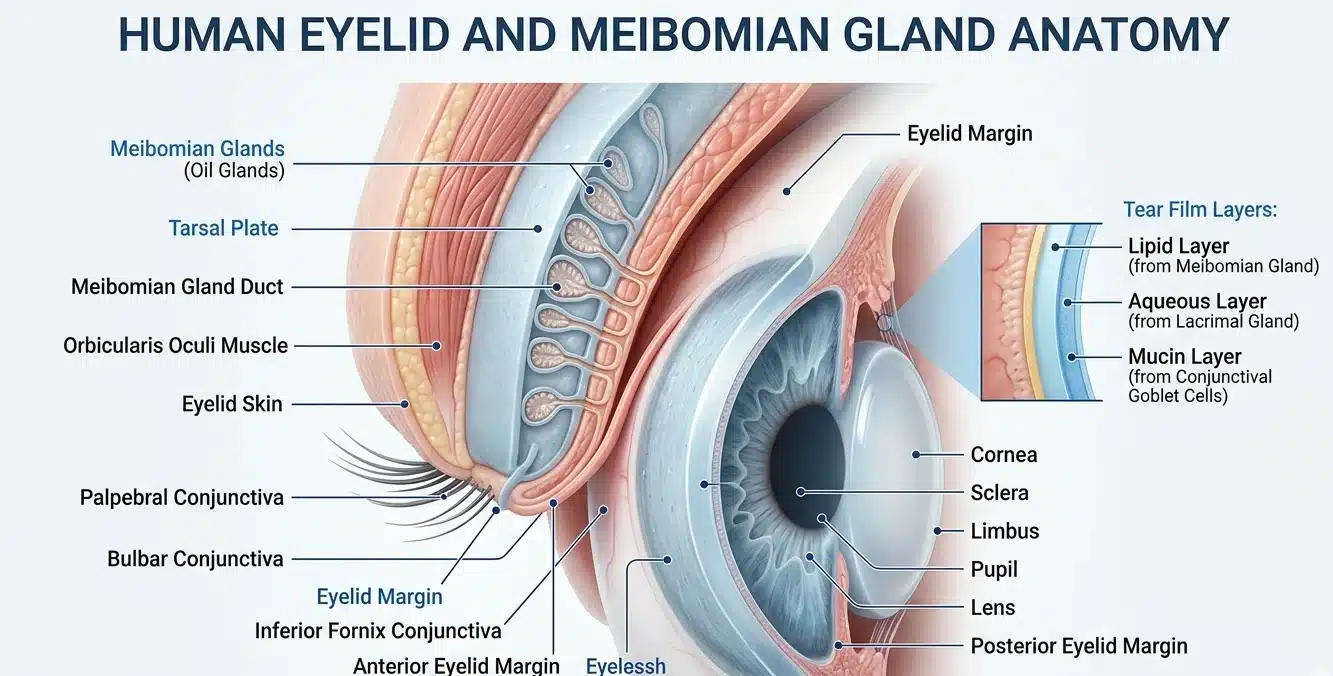
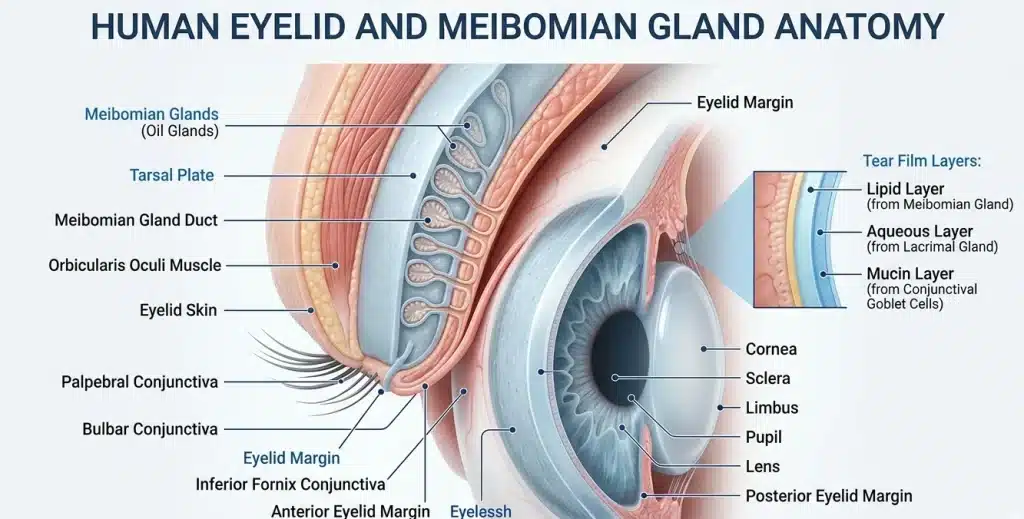
To understand chalazion causes, one must first understand the anatomy of the eyelid. The human eyelid is not merely a flap of skin; it is a complex structure containing muscles, nerves, and specialized glands.
The Meibomian Glands
The stars of this biological system are the meibomian glands. Located within the tarsal plates (the firm structural part of the eyelid), there are approximately 30 to 40 of these glands in the upper lid and 20 to 30 in the lower lid.
Their primary function is to secrete meibum, an oily substance that forms the outermost layer of the eye’s tear film. This oil is crucial because:
- Prevents Evaporation: It stops the watery part of your tears from evaporating too quickly.
- Lubrication: It allows the eyelids to slide smoothly over the surface of the eye during blinking.
- Tear Stability: It keeps the tear film “stuck” to the eye, ensuring constant moisture.
When a chalazion forms, it is because one of these microscopic “oil pipes” has become clogged.
Part 2: Primary and Secondary Chalazion Causes
Understanding chalazion causes is the first step toward prevention. While a blockage is the immediate physical reason, several underlying factors contribute to why these blockages happen.
1. Meibomian Gland Dysfunction (MGD)
The most frequent of all chalazion causes is MGD. In this condition, the oil produced by the glands becomes too thick—moving from a clear, olive-oil consistency to something more like toothpaste. This thickened oil cannot flow out of the narrow gland opening, leading to a backup.
2. Chronic Blepharitis
Blepharitis is an inflammation of the eyelid margins. It is often caused by an overgrowth of normal skin bacteria or microscopic mites called Demodex. This inflammation creates debris (often looking like dandruff on the lashes) that physically plugs the gland openings. At Ebsaar Eye Clinic, our specialists frequently treat blepharitis as a preventative measure against recurring chalazia.
3. Systemic Skin Conditions
The skin of the face is intimately connected to the health of the eyelids. Patients with the following conditions are at a significantly higher risk:
- Ocular Rosacea: A chronic inflammatory condition that causes redness and swelling of the eyelids.
- Seborrheic Dermatitis: A condition characterized by oily, waxy scales on the skin.
- Acne Vulgaris: General skin oiliness can correlate with meibomian gland issues.
4. Environmental and Lifestyle Factors
- Makeup Hygiene: Failing to remove eye makeup (eyeliner and mascara) can physically block the pores of the eyelid.
- Air Quality: Dust and pollutants in urban environments like Dubai can contribute to eyelid irritation.
- Digital Eye Strain: We tend to blink less when looking at screens. Blinking is the mechanical force that “pumps” oil out of the glands; reduced blinking leads to oil stagnation.
Part 3: Identifying the Symptoms
How do you know if that bump is a chalazion? While an ophthalmologist at Ebsaar Eye Clinic will provide a definitive diagnosis, here are the common signs:
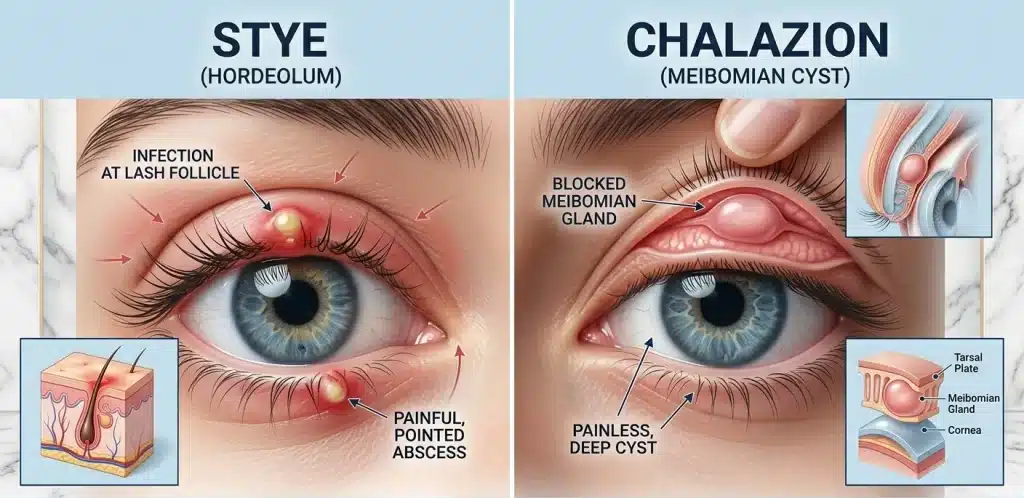
- Initial Stage: The eyelid may become red, swollen, and tender to the touch. It may feel like a stye at first.
- Chronic Stage: After a few days, the pain usually subsides, leaving a firm, round, painless lump.
- Visual Disturbance: If the chalazion grows large enough, it can press against the cornea (the clear front window of the eye). This changes the shape of the eye slightly, leading to astigmatism and blurred vision.
- Internal Redness: If you flip the eyelid (a task best left to a professional), the inner lining will appear red or gray over the site of the bump.
Part 4: Chalazion vs. Stye (Hordeolum)
One of the most common questions we receive at Ebsaar Eye Surgery Center is: “Is this just a stye?”
| Feature | Stye (Hordeolum) | Chalazion |
| Pathology | Acute bacterial infection. | Chronic inflammatory blockage. |
| Pain | Sharp, localized pain. | Dull ache or entirely painless. |
| Appearance | Like a pimple or “point” on the lid margin. | A smooth, round lump deeper in the lid. |
| Contagion | Can be mildly contagious due to bacteria. | Non-contagious. |
Part 5: At-Home Management and First Aid
If you notice a bump forming, immediate action can often prevent the need for surgery.
The Power of Heat
Heat is the most effective way to address chalazion causes. Think of the blocked oil like butter in a fridge; heat melts it so it can flow.
- The 15-Minute Rule: Use a warm compress for a full 15 minutes. A washcloth often loses heat too fast, so we recommend a microwaveable eye mask or a warm boiled egg wrapped in a thin cloth.
- Gentle Massage: After heating, use a clean finger to massage the lid toward the lashes. For the upper lid, massage downward; for the lower lid, massage upward.
What NOT to Do
Never attempt to “pop” a chalazion. Unlike a pimple, the fluid is deep within the eyelid tissue. Squeezing can force the inflammation into the surrounding eyelid tissue, causing a much more serious infection called preseptal cellulitis, which may require emergency care.
Part 6: Clinical Treatments at Ebsaar Eye Clinic
When home remedies fail, it is time to visit a professional eye clinic. At Ebsaar Eye Clinic, we offer a stepped approach to treatment.
Medical Therapy
- Topical Antibiotics/Steroids: These drops or ointments reduce the inflammatory response and treat any secondary bacterial components.
- Oral Medications: In cases of chronic MGD or rosacea, a low-dose antibiotic (like doxycycline) may be prescribed not to kill bacteria, but for its anti-inflammatory properties that help thin the eyelid oils.
Steroid Injections
For smaller chalazia that are purely inflammatory, an ophthalmologist can inject a corticosteroid directly into the lump. This often causes the chalazion to shrink and disappear over a few weeks without the need for an incision.
Part 7: Surgical Intervention at Ebsaar Eye Surgery Center
If a chalazion persists for more than a month or affects vision, the Ebsaar Eye Surgery Center provides a quick, effective surgical solution.
The Procedure: Incision and Curettage
This is a minor, “office-based” procedure that takes about 10–15 minutes.
- Local Anesthetic: The eyelid is numbed so you feel no pain.
- The Clamp: A specialized chalazion clamp is used to stabilize the lid and minimize bleeding.
- The Incision: The surgeon makes a tiny vertical incision on the inside of the eyelid. This ensures there is no visible scar on the skin.
- Curettage: The contents of the cyst are gently removed.
- Recovery: An antibiotic ointment is applied, and the eye is usually padded for a few hours.
Biopsy
In rare cases, especially in older patients or when a chalazion keeps returning in the exact same spot, our surgeons will send a tissue sample for a biopsy. This is a safety precaution to rule out rare conditions like sebaceous gland carcinoma.
Part 8: Post-Operative Care and Long-Term Prevention
Recovery from surgery at Ebsaar Eye Surgery Center is typically very fast. Patients can usually return to work the next day.
Part 9: Advanced Diagnostics at Ebsaar Eye Clinic
When a patient visits Ebsaar Eye Clinic with a recurring lid lump, we look beyond the surface. Modern ophthalmology allows us to visualize the internal structure of the glands to identify the root chalazion causes.
Meibography: Seeing the Invisible
One of the most significant advancements in our clinic is Meibography. This non-invasive imaging technique uses infrared light to look through the eyelid tissue and map the meibomian glands.
- Healthy Glands: Appear as long, straight, white “piano keys” standing side-by-side.
- Atrophied Glands: Glands that have been chronically blocked (often the primary chalazion causes) will appear shortened, twisted, or entirely missing (gland dropout). By showing patients their own Meibography scans, the specialists at Ebsaar Eye Clinic can demonstrate why they are prone to cysts and tailor a preventative plan.
Tear Film Osmolarity Testing
Because a chalazion is often a symptom of a larger “dry eye” ecosystem, we measure the salt concentration (osmolarity) of the tears. Highly concentrated tears are a sign of inflammation, which can exacerbate gland blockages.
Part 10: The Impact of the Dubai Environment
Living in a desert climate like Dubai presents unique challenges for eyelid health. At Ebsaar Eye Surgery Center, we often see a seasonal uptick in eyelid conditions.
Dust and Particulate Matter
Fine desert sand and urban dust can settle on the eyelid margins. If not cleaned daily, these particles mix with the natural oils and skin cells to create a “plug” that leads to a chalazion. This is why “Lid Hygiene” is our most frequent recommendation for residents.
Air Conditioning and Evaporative Stress
Constant exposure to AC dries out the ocular surface. To compensate, the meibomian glands try to produce more oil. If the glands are already slightly narrowed, this increased demand leads to a higher frequency of blockages and chalazion causes.
Part 11: Systemic Links – More Than Just an Eye Issue
A chalazion can sometimes be a “canary in the coal mine” for other health issues. Our ophthalmologists at Ebsaar Eye Clinic often coordinate care with dermatologists or GPs when we suspect systemic involvement.
The Gut-Skin-Eye Axis
Recent research suggests a link between gut health and inflammatory skin/eye conditions. Patients with small intestinal bacterial overgrowth (SIBO) or general gut dysbiosis often suffer from more frequent eyelid inflammation.
Hormonal Fluctuations
Androgens (male hormones, though present in both sexes) regulate the production of oil in the meibomian glands. Hormonal shifts during puberty, pregnancy, or menopause can change the viscosity of the oil, making a chalazion more likely.
Part 12: Pediatric Chalazia – A Specialized Approach
While more common in adults, children frequently develop eyelid cysts. Treating a child at Ebsaar Eye Surgery Center requires a different psychological and clinical approach.
Why Do Children Get Them?
Children often rub their eyes with unwashed hands, introducing debris and bacteria. Furthermore, their oil glands are smaller and more easily blocked.
The Conservative Path
In children, we prefer a “wait and watch” approach combined with very consistent warm compresses. Surgery for a child usually requires general anesthesia or heavy sedation to ensure safety, so our ophthalmologists only recommend it if the cyst is causing a significant refractive error (amblyopia/lazy eye) or if it becomes infected.
Part 13: Aesthetic Considerations in Eyelid Surgery
At Ebsaar Eye Surgery Center, we recognize that the eyes are the most prominent feature of the face. Surgery must be functional and cosmetically invisible.
The “Inside-Out” Technique
By performing the incision on the conjunctival (inner) side of the lid, we avoid cutting through the delicate skin of the eyelid. This prevents:
- Visible scarring.
- Disruption of the eyelash follicles (which can cause permanent gaps in the lashes).
- Changes to the eyelid’s natural fold or contour.
Managing the “Hard Lump” (Granuloma)
Sometimes, after the oil is gone, a hard lump of scar tissue (a granuloma) remains. If this is aesthetically unpleasing, our surgeons can meticulously excise this tissue to restore a perfectly smooth eyelid profile.
Part 14: Innovations in Treatment – Beyond the Scalpel
For patients who are hesitant about surgery, Ebsaar Eye Clinic stays at the forefront of non-surgical technology.
Intense Pulsed Light (IPL) Therapy
Originally a dermatological treatment for rosacea, IPL is now a revolutionary tool for treating chalazion causes.
- Heat: It warms the glands from the inside.
- Inflammation: It closes the abnormal “telangiectatic” blood vessels that leak inflammatory markers into the eyelids.
- Bacteria: It helps reduce the bacterial and mite load on the skin. Many patients at Ebsaar Eye Clinic find that a series of IPL sessions significantly reduces the frequency of their chalazia.
Thermal Pulsation (Lipiflow)
This device fits over the eye and simultaneously applies heat and “pulsed” pressure to the lids. It essentially “deep cleans” the glands in a way that manual massage cannot match.
Part 15: Nutritional Science and Ocular Health
What you eat can change the chemistry of your eyelid oil. At Ebsaar Eye Clinic, we provide nutritional guidance as part of our holistic care.
The Omega Balance
A diet high in Omega-3 fatty acids (found in salmon, walnuts, and flaxseed) promotes “thinner,” more fluid oil. Conversely, a diet high in processed oils (Omega-6) can promote inflammation. We often recommend high-potency, re-esterified triglyceride (rTG) fish oil as a preventative measure.
Hydration and Gland Function
Dehydration affects all secretions in the body. Ensuring adequate water intake, especially in the UAE’s heat, ensures that the aqueous (watery) part of the tear film is healthy, which in turn helps the oil layer spread more effectively.
Part 16: Summary of the Patient Journey at Ebsaar

To wrap up this 4500-word deep dive, let’s look at the “Standard of Care” at Ebsaar Eye Clinic and Ebsaar Eye Surgery Center.
Long-term Maintenance: A customized hygiene regimen to ensure the bump never returns.ding chalazion causes is the first step—taking action is the second.
Initial Consultation: A thorough history to identify chalazion causes (lifestyle, skin type, medications).
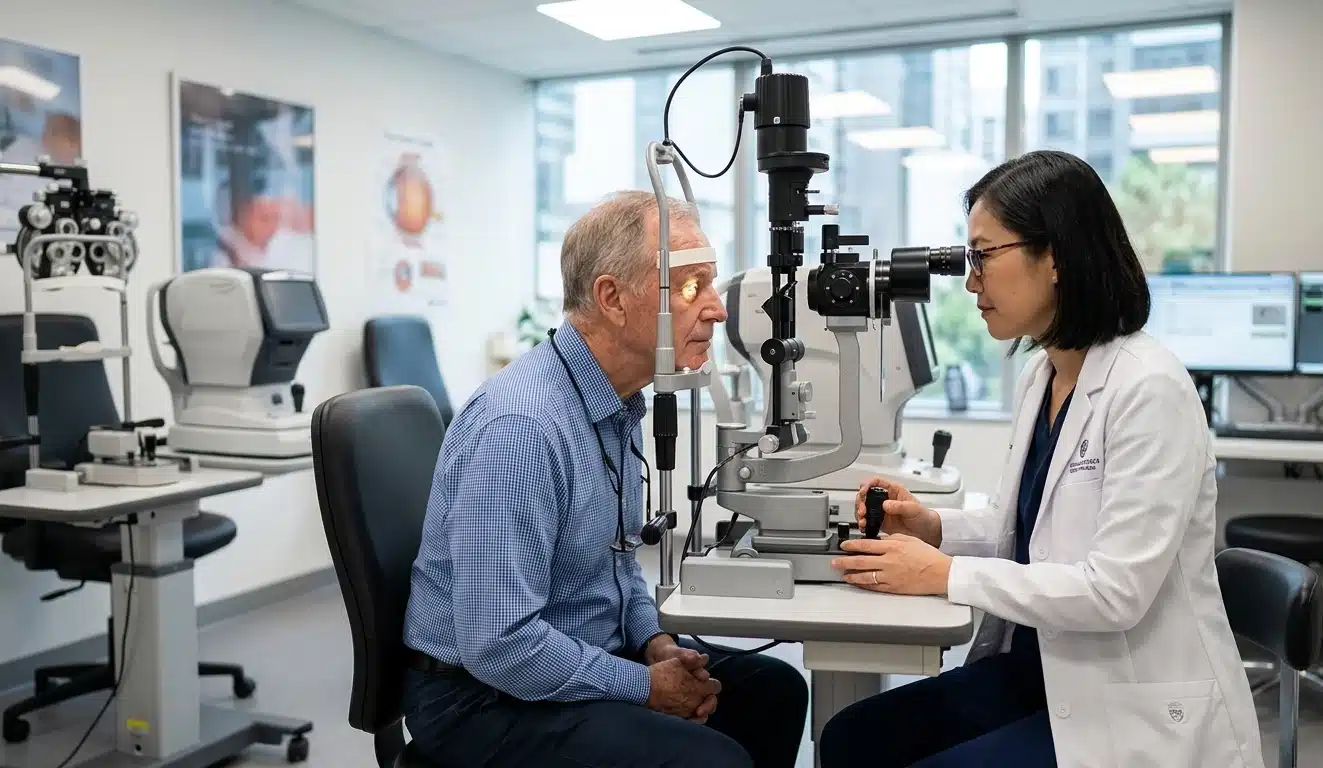
Slit-Lamp Examination: High-magnification visualization of the eyelid margin and gland openings.
Diagnostic Imaging: Meibography to assess gland health.
Tailored Plan: * Mild Case: At-home heat therapy and lid wipes.
Moderate Case: Medicated drops and perhaps an IPL session.
Chronic Case: A steroid injection or a scheduled minor surgery.
Surgery: A 15-minute, painless procedure at Ebsaar Eye Surgery Center.
The Psychology of Clear Vision
Living with a chronic chalazion can be more than a physical burden; it often carries a psychological weight. Patients frequently report feeling self-conscious in social or professional settings, particularly in a city like Dubai where image and confidence are paramount. At Ebsaar Eye Surgery Center, our approach acknowledges this. By providing rapid, scarless resolutions, we aren’t just removing a blockage; we are restoring a patient’s sense of self. The “clear vision” we aim for isn’t just about what you see through your pupil—it’s about how you feel when you look in the mirror.
A Commitment to Community Education
Our final thought must also touch upon our role as educators. Ebsaar Eye Clinic is committed to raising the standard of ocular hygiene across the UAE. We believe that by teaching a child the correct way to clean their lids, or by advising a professional on the importance of “blinking breaks” during long hours at a computer, we are preventing thousands of future surgeries.
Environmental awareness is another pillar of our mission. As Dubai continues to grow as a global hub, the intersection of urban living and eye health becomes more critical. We advocate for indoor air quality standards and protective eyewear that mitigates the evaporative stress of our unique climate.
The Ebsaar Standard
In summary, a chalazion is rarely “just a bump.” It is a localized manifestation of a systemic, environmental, or behavioral story. Whether that story involves the dry air of a desert office, a genetic predisposition to skin inflammation, or the simple habits of daily life, Ebsaar Eye Clinic and Ebsaar Eye Surgery Center stand ready to provide the final chapter of relief.
We invite you to view your eye health as a journey, not a destination. From the high-tech infrared scans of our diagnostic suite to the precise, gentle hands of our surgeons, every detail is designed for one purpose: to keep your “windshield wipers” working perfectly, ensuring that every moment you spend in our beautiful city is seen with absolute clarity and comfort.