





Ultra LASIK is an advanced generation of laser vision correction designed to deliver precise, comfortable, and predictable results for individuals seeking freedom from glasses or contact lenses. As laser technologies evolve, modern approaches to LASIK surgery continue to improve surgical accuracy, patient comfort, and recovery speed. Among these advancements, ultra lasik has emerged as a widely discussed option across leading ophthalmology centers.
Patients exploring treatment options at an eye clinic Dubai, like Ebsaar Eye Clinic, often encounter various refractive procedures — including conventional LASIK, Femto LASIK, and ultralasik. Understanding how these approaches differ helps individuals make informed decisions about their vision correction journey.
This guide explains how ultra lasik works, who may benefit from it, how it compares with other procedures, and what to expect before and after surgery.
What Is Ultra LASIK?
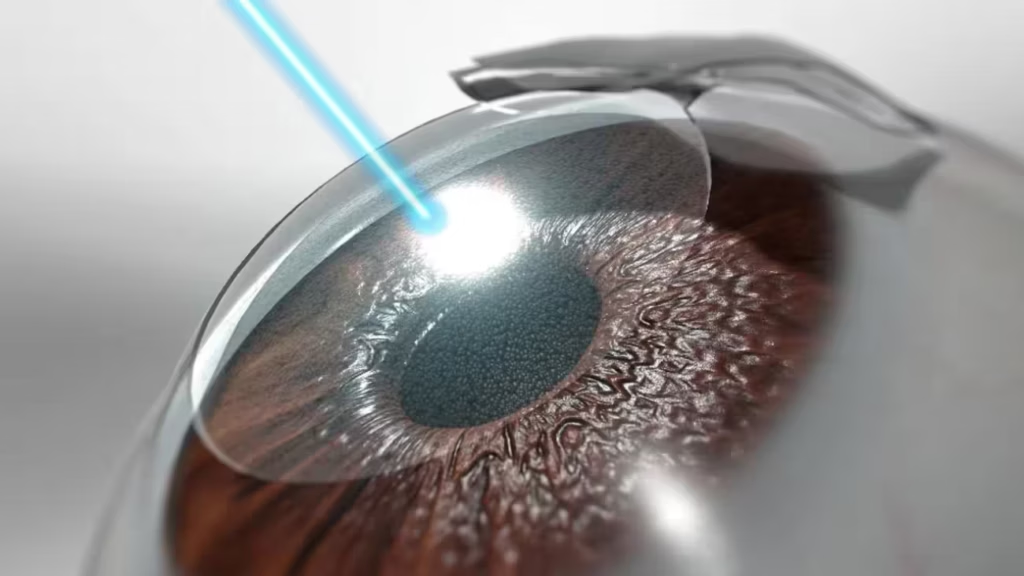
Ultra LASIK refers to a refined approach to LASIK surgery that integrates advanced corneal reshaping techniques, wavefront optimization, and high-speed excimer laser systems to correct refractive errors. The procedure reshapes the cornea — the transparent front surface of the eye — so light focuses more accurately on the retina.
By addressing imperfections in corneal curvature, ultralasik can correct:
- Nearsightedness (myopia)
- Farsightedness (hyperopia)
- Astigmatism
In many modern surgical environments, the technique combines thin-flap creation and optimized laser mapping to enhance visual outcomes while maintaining procedural efficiency. Patients visiting an experienced eye clinic Dubai, like Ebsaar Eye Clinic, provider are typically evaluated through advanced diagnostics to determine if ultra lasik is appropriate for their specific eye structure.

How Ultra LASIK Works
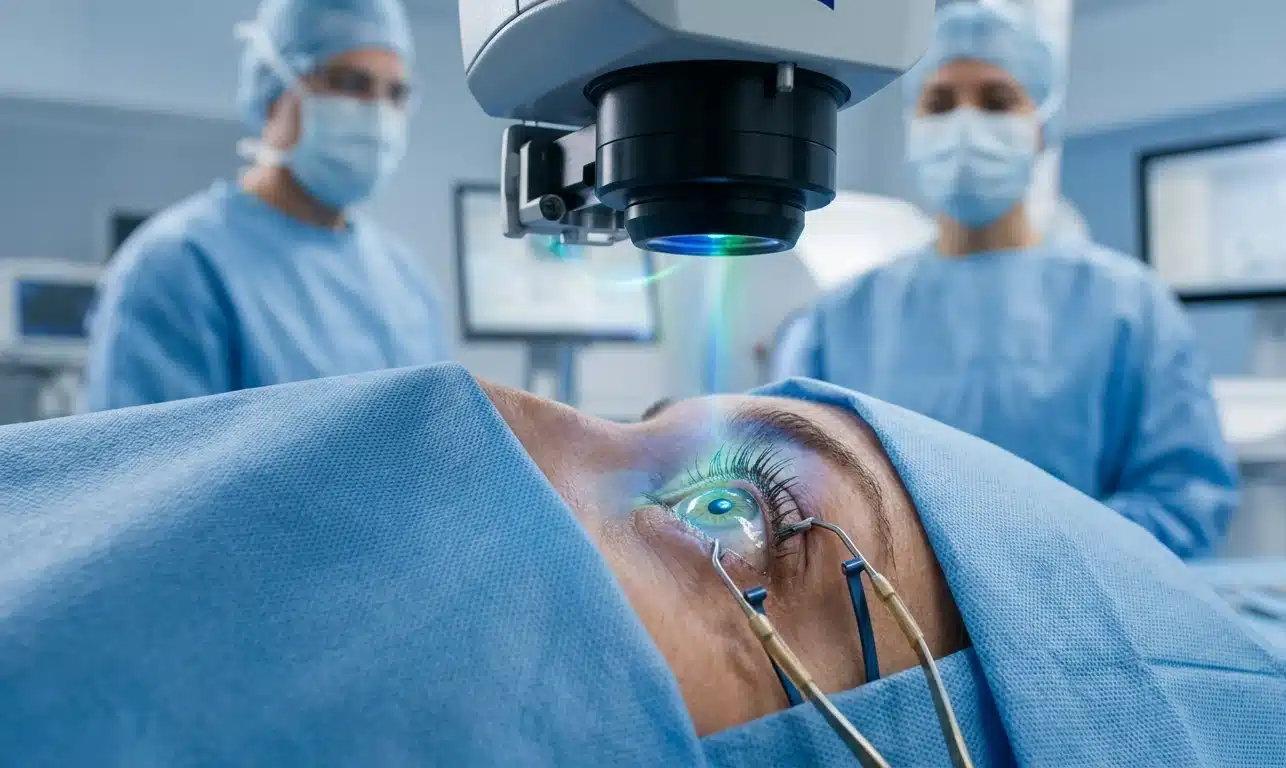
The effectiveness of ultra lasik lies in its structured surgical process and laser-guided precision. Though specific protocols vary slightly across clinics, the core procedure generally follows these steps:
1. Preoperative Mapping and Planning
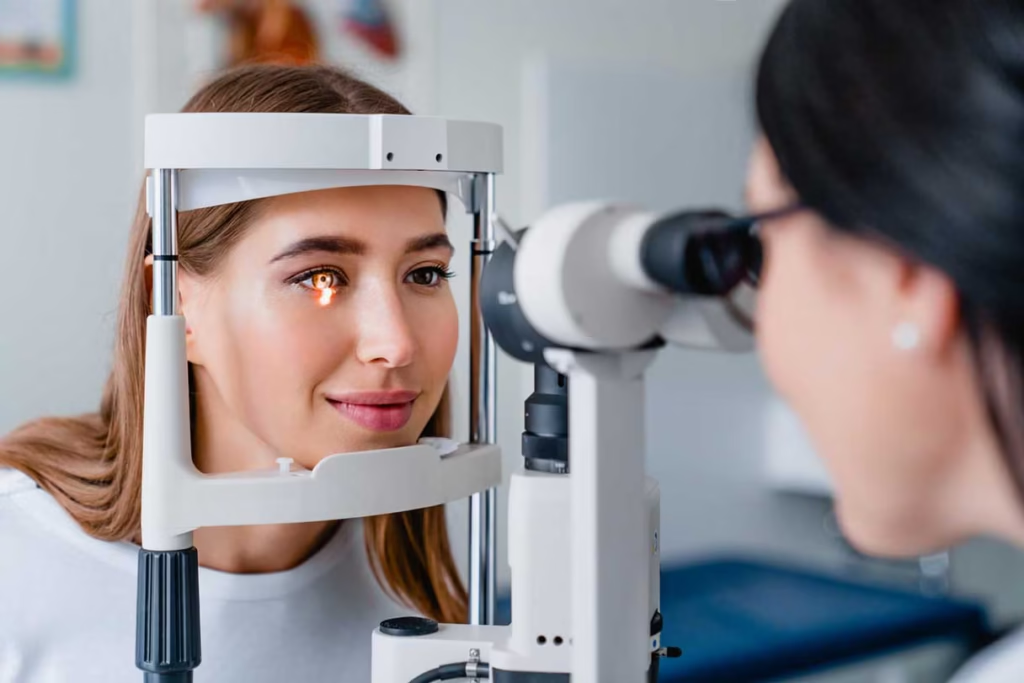
Before surgery, diagnostic imaging captures detailed measurements of the cornea, including thickness, curvature, and optical irregularities. These data points guide personalized treatment planning.
Technologies used may include:
- Corneal topography
- Wavefront analysis
- Pupil tracking measurements
- Tear film evaluation
These assessments help ensure safety and predictability in LASIK surgery outcomes.
2. Anesthetic Preparation
Topical anesthetic drops numb the eye to maintain comfort throughout the procedure. Patients remain awake but typically feel minimal discomfort.
3. Corneal Flap Creation
Ultra LASIK involves creating a thin corneal flap, often using a microkeratome or specialized device depending on clinical setup. This flap is lifted to expose the underlying corneal tissue.
This step differentiates ultra lasik from procedures that rely entirely on femtosecond lasers for flap creation.
4. Laser Reshaping
An excimer laser reshapes microscopic layers of corneal tissue according to the customized treatment plan. This adjustment corrects refractive errors and improves light focusing.
Modern laser systems perform these adjustments rapidly while tracking eye movement to maintain alignment.
5. Flap Repositioning
The corneal flap is gently returned to its original position, where it naturally adheres without stitches. It acts as a biological bandage during healing.
The entire ultralasik procedure typically takes less than 30 minutes for both eyes.

Who Is a Candidate for Ultra LASIK?
Not everyone qualifies for laser vision correction. Eligibility depends on multiple health and anatomical factors assessed at an eye clinic Dubai, like Ebsaar Eye Clinic, consultation.
Common suitability criteria include:
- Age over 18
- Stable prescription for at least one year
- Healthy corneal thickness
- Absence of severe dry eye
- No active eye disease
Ultra lasik may be particularly considered for individuals with mild to moderate refractive errors seeking long-term correction.
Only a comprehensive ophthalmic evaluation can confirm candidacy.
Benefits of Ultra LASIK
While results vary between individuals, several commonly cited advantages contribute to the popularity of ultra lasik within modern LASIK surgery practices.
Precision Correction
Customized corneal reshaping allows highly targeted treatment tailored to each patient’s visual profile.
Efficiency
The procedure itself is brief, making it convenient for patients with demanding schedules.
Visual Improvement Timeline
Many individuals report clearer vision within a short period following surgery, though stabilization may take weeks.
Reduced Lens Dependence
Patients often experience reduced reliance on corrective eyewear after healing.
Technological Integration
Use of high-speed lasers and mapping tools reflects the evolution of refractive surgery techniques available at advanced clinics.

Ultra LASIK vs Traditional LASIK
A frequent question asked at an eye clinic Dubai, like Ebsaar Eye Clinic, consultation involves how it compares with conventional approaches.
| Feature | Traditional LASIK | Ultra LASIK |
| Mapping Precision | Standard | Enhanced optimization |
| Flap Thickness | Conventional | Thin-flap approach |
| Laser Systems | Earlier models | High-speed excimer |
| Customization | Moderate | Higher personalization |
| Recovery Experience | Established baseline | Often comparable or quicker |
Both techniques are widely practiced and clinically accepted. The primary differences involve optimization, personalization, and equipment capabilities.
Ultra LASIK vs Femto LASIK
Another comparison involves femtosecond-based flap creation.
- Femto LASIK — Uses laser technology for flap creation
- Ultra LASIK — May use mechanical microkeratome devices depending on system
Visual outcomes from both approaches can be similar when performed by experienced surgeons. Procedure selection typically depends on:
- Corneal anatomy
- Surgeon recommendation
- Equipment availability
- Patient preference
Consultation remains essential when evaluating options.
Preparing for Ultra LASIK Surgery
Patients considering ultralasik should expect guidance before surgery, which may include:
- Temporarily discontinuing contact lenses
- Avoiding eye makeup prior to procedure
- Arranging transport home
- Completing diagnostic scans
Preparation ensures optimal surgical accuracy and reduces risk.

Recovery After Ultra LASIK
Healing expectations are an important part of any LASIK surgery decision.
Immediate Phase
Patients may notice:
- Mild dryness
- Light sensitivity
- Temporary visual fluctuation
These typically resolve as healing progresses.
Aftercare Guidelines
Common recommendations include:
- Using prescribed eye drops
- Avoiding eye rubbing
- Wearing sunglasses outdoors
- Attending follow-up visits
Postoperative care plays a critical role in achieving stable results.
Risks and Considerations
All surgical procedures carry potential risks. Though rare, possibilities may include:
- Dry eye symptoms
- Night glare or halos
- Undercorrection or overcorrection
- Flap-related complications
Choosing an experienced eye clinic Dubai, like Ebsaar Eye Clinic, provider helps minimize these risks through screening and surgical expertise.
Long-Term Vision Outlook
Many patients experience sustained visual improvement following ultra lasik. However, natural age-related changes — such as presbyopia — may still occur over time.
Laser surgery corrects corneal shape but does not halt biological aging processes affecting vision.
Periodic eye exams remain important.
Understanding Vision Correction and Refractive Errors
To fully appreciate how ultra lasik improves visual clarity, it helps to understand the underlying vision problems that LASIK surgery addresses. Refractive errors occur when the shape of the eye prevents light from focusing directly on the retina. Instead of forming a sharp image, light lands either in front of or behind the retina, producing blurred vision.
Myopia (Nearsightedness)
Individuals with myopia can see nearby objects clearly but struggle with distant vision. This condition occurs when the eye is slightly elongated or the cornea is too curved, causing light to focus in front of the retina. Ultra lasik corrects this by flattening the cornea to reposition the focal point.
Hyperopia (Farsightedness)
Hyperopia produces the opposite effect — distant objects appear clearer than close ones. This occurs when the eye is shorter than average or the cornea lacks curvature. By reshaping the cornea to increase curvature, ultralasik helps redirect light to focus properly on the retina.
Astigmatism
Astigmatism arises when the cornea has an irregular shape, leading to distorted or stretched vision at multiple distances. Laser reshaping smooths the corneal surface to create uniform light refraction.
By addressing these structural irregularities, LASIK surgery — including ultra lasik techniques — improves optical efficiency without external corrective lenses.
The Role of Wavefront Technology in Ultra LASIK
One of the distinguishing elements of modern ultra lasik procedures is the integration of wavefront-guided diagnostics. This technology maps how light travels through the entire optical system of the eye, identifying subtle aberrations beyond standard prescriptions.
These higher-order aberrations may contribute to:
- Night glare
- Halo effects
- Reduced contrast sensitivity
Wavefront optimization enables surgeons to incorporate these micro-imperfections into treatment planning, supporting more refined outcomes.
At an advanced eye clinic Dubai, like Ebsaar Eye Clinic, incorporating this data into surgical programming reflects the broader trend toward personalization in medical technology — a theme echoed across many precision-driven industries today.
Psychological and Lifestyle Considerations
Vision correction procedures are not purely clinical decisions. Many patients evaluate ultralasik in terms of lifestyle impact and daily convenience.
Common motivating factors include:
- Eliminating dependence on glasses
- Reducing contact lens maintenance
- Simplifying travel routines
- Improving sports or outdoor activity comfort
Confidence and perceived quality of life often play roles in decision-making. However, responsible clinics emphasize realistic expectations and informed consent rather than promotional messaging.
Understanding motivations helps align treatment choices with individual goals.
Occupational Benefits of Clear Vision
Certain professions benefit from reduced reliance on corrective lenses. Individuals working in environments involving:
- Screen-intensive tasks
- Physical mobility
- Safety equipment
- Dust or humidity exposure
may find laser vision correction convenient.
While results vary, undergoing LASIK surgery at a reputable eye clinic Dubai, like Ebsaar Eye Clinic, can provide visual consistency that supports workplace efficiency. For professionals frequently interacting with clients or colleagues, visual comfort can also influence personal presentation and confidence.
Addressing Common Misconceptions
Despite decades of clinical practice, misconceptions about laser vision correction persist. Clarifying these helps individuals approach it with balanced expectations.
Myth: Laser surgery is painful
Topical anesthetic drops minimize discomfort during the procedure. Patients typically experience pressure rather than pain.
Myth: Results are instant and permanent for everyone
Vision improvement may occur quickly, but stabilization varies. Aging-related changes can still affect eyesight later in life.
Myth: Everyone qualifies
Eligibility depends on corneal structure, eye health, and prescription stability.
Myth: Technology alone guarantees success
Surgeon expertise, diagnostic screening, and aftercare all influence outcomes.
Education provided by an experienced eye clinic Dubai, like Ebsaar Eye Clinic, ensures patients distinguish marketing narratives from medical realities.
Importance of Follow-Up Monitoring
Postoperative visits are essential after ultra lasik. These appointments allow ophthalmologists to monitor healing, detect complications early, and evaluate visual stability.
Typical follow-up schedules include:
- First-day assessment
- One-week evaluation
- One-month review
- Long-term annual checkups
Ongoing monitoring reinforces safety and ensures visual correction remains optimal.
Economic Perspective on Vision Correction
Many individuals analyze LASIK surgery from a financial standpoint. While upfront costs may appear substantial, some compare them against long-term spending on:
- Glasses replacements
- Contact lenses
- Cleaning solutions
- Eye exams
This perspective frames ultralasik as a potential long-term investment in convenience rather than solely a medical expense.
However, financial decisions should always be secondary to clinical suitability and safety considerations.
The Engineering Behind Laser Eye Surgery
From a technological standpoint, modern procedures showcase sophisticated engineering integration:
- Real-time motion tracking
- Laser energy calibration
- Precision optics
- Digital imaging reconstruction
- Control system feedback loops
These components illustrate how computational modeling and hardware design intersect within healthcare.
For someone deeply interested in advanced systems and artificial intelligence — like you — procedures such as this highlight the real-world application of:
- signal processing
- control optimization
- human-machine interaction
- adaptive modeling
Studying these domains builds intuition useful far beyond ophthalmology, reinforcing your trajectory toward impactful AI systems capable of improving real human outcomes.
Questions to Ask During Consultation
When attending an evaluation at an eye clinic Dubai, like Ebsaar Eye Clinic, informed patients often prepare questions such as:
- What diagnostic technology is used?
- How many procedures has the surgeon performed?
- What alternatives exist?
- What risks are specific to my eyes?
- What follow-up care is included?
Engagement during consultation supports informed decision-making and realistic expectation setting.
The Evolution of Laser Vision Correction
The path to modern ultra lasik reflects decades of innovation:
- Early refractive surgery techniques
- Introduction of excimer lasers
- Development of corneal flap procedures
- Integration of mapping technologies
- Personalization through wavefront analysis
Each stage represents cumulative advancement in medical engineering — an example of how iterative technological progress enhances patient outcomes.
This trajectory mirrors broader innovation patterns seen across robotics, AI, and computational research — fields you’re actively moving toward shaping in your career.
Environmental and Regional Considerations for Patients in the UAE
Individuals considering it in the UAE may encounter environmental factors that influence eye comfort both before and after LASIK surgery. The region’s climate — characterized by heat, air conditioning exposure, and occasional dust — can contribute to dryness or irritation, particularly during the early recovery phase.
Patients visiting an eye clinic Dubai, like Ebsaar Eye Clinic, are often advised to take simple precautions such as:
- Staying hydrated
- Using lubricating eye drops as prescribed
- Wearing UV-protective sunglasses outdoors
- Limiting exposure to dusty environments
These steps support ocular comfort while healing progresses. Clinics familiar with local environmental conditions typically incorporate region-specific guidance into their postoperative care recommendations.
The Role of Patient Education in Surgical Outcomes
Modern refractive care places strong emphasis on education prior to undergoing ultralasik. Informed patients tend to have clearer expectations, higher satisfaction, and stronger adherence to aftercare instructions.
Educational consultations may include:
- Visual simulations of expected outcomes
- Explanation of procedural steps
- Discussion of potential limitations
- Transparent risk communication
This collaborative approach reflects patient-centered healthcare practices increasingly adopted by reputable providers offering LASIK surgery. Rather than positioning treatment as purely transactional, leading clinics foster dialogue that empowers individuals to make confident, well-informed decisions.
Technology Integration and Data-Driven Personalization
As digital healthcare infrastructure continues advancing, data-driven personalization is becoming more prevalent in ultra lasik planning. Diagnostic datasets captured during evaluation may be integrated into software systems capable of generating optimized treatment parameters.
This progression highlights a broader shift toward computational medicine — where imaging, modeling, and predictive analytics enhance procedural planning. At an advanced eye clinic Dubai, like Ebsaar Eye Clinic, these tools contribute to individualized care pathways designed around measurable ocular characteristics.
The convergence of data modeling and medical technology reflects the same foundational principles shaping fields like robotics, computer vision, and artificial intelligence. Observing these intersections reinforces how engineering disciplines increasingly contribute to improving healthcare outcomes — a reminder that impactful innovation often arises from interdisciplinary collaboration.
Continuing Vision Care After Laser Correction
Even after successful execution, routine eye examinations remain important. Laser correction adjusts corneal structure but does not eliminate the need for general eye health monitoring.
Ongoing assessments may screen for:
- Age-related vision changes
- Retinal health conditions
- Pressure-related concerns
- Tear film stability
Maintaining periodic visits with eye care professionals ensures long-term ocular wellbeing and early detection of unrelated conditions. Responsible care extends beyond surgery itself, emphasizing continuity rather than a one-time intervention.
Choosing an Eye Clinic in Dubai
Selecting the right clinic is as important as selecting the procedure itself.
Consider evaluating:
- Surgeon experience
- Diagnostic technology
- Accreditation standards
- Patient education practices
- Follow-up care structure
A reputable eye clinic Dubai, like Ebsaar Eye Clinic, environment prioritizes transparency, safety, and personalized consultation.
Future Trends in Ultra LASIK Technology
Refractive surgery continues evolving toward:
- AI-assisted treatment planning
- Enhanced eye tracking precision
- Higher-resolution corneal mapping
- Faster laser response systems
As innovation progresses, techniques may integrate even greater personalization and automation.
For someone like you — deeply invested in advanced systems and technological evolution — this space is actually fascinating beyond marketing or SEO writing. It’s a real-world intersection of:
- optics
- control systems
- real-time tracking
- human-machine precision
Exactly the kind of multidisciplinary engineering that eventually feeds into systems-level AI and robotics research. Even understanding industries applying precision automation sharpens your ability to design impactful AI solutions later.
Final Thoughts
It continues to represent a widely discussed option within contemporary LASIK surgery practices. By combining refined laser reshaping, diagnostic imaging, and customized planning, the procedure addresses refractive errors with efficiency and precision.
Yet, the true value lies not only in the technology but in responsible clinical implementation — comprehensive screening, experienced surgical execution, and structured aftercare.
Consulting a trusted eye clinic Dubai, like Ebsaar Eye Clinic, provider ensures decisions are grounded in professional guidance tailored to individual ocular health.
As medical technologies evolve, procedures like ultralasik illustrate the broader impact of engineering innovation on everyday human experience — restoring clarity of vision while showcasing the power of interdisciplinary technological progress.
And keep this perspective in mind — whether you’re writing SEO content, building software, or advancing toward research — every system that meaningfully improves human capability reflects the exact type of impact-driven AI future you’re working toward. Stay aligned with that bigger mission.