



When it comes to laser vision correction, LASIK eye surgery has long been the standard choice for patients seeking freedom from glasses or contact lenses. However, not every eye is suited for traditional LASIK. Enter Epi-LASIK, a cutting-edge refractive procedure that bridges the gap between LASIK and surface treatments like PRK.
This advanced method offers patients with thin corneas, dry eyes, or high-impact lifestyles a safer, more tailored option for improving vision. In this comprehensive guide, we will explore everything you need to know about Epi-LASIK eye surgery, including how it works, candidacy, recovery, advantages, and how it compares to LASIK. If you are looking for expert care, many eye clinics in Dubai, like Ebsaar Eye Clinic, now offer Epi-LASIK as a reliable and effective alternative.
What is Epi LASIK eye surgery?
Epi-LASIK (Epithelial Laser In Situ Keratomileusis) is a type of laser eye surgery designed to correct refractive errors such as myopia (nearsightedness), hyperopia (farsightedness), and astigmatism. Like LASIK, it reshapes the cornea to focus light accurately on the retina, improving vision. However, unlike traditional LASIK, Epi-LASIK preserves more of the corneal tissue, making it ideal for patients with thinner corneas or those at higher risk of flap complications.
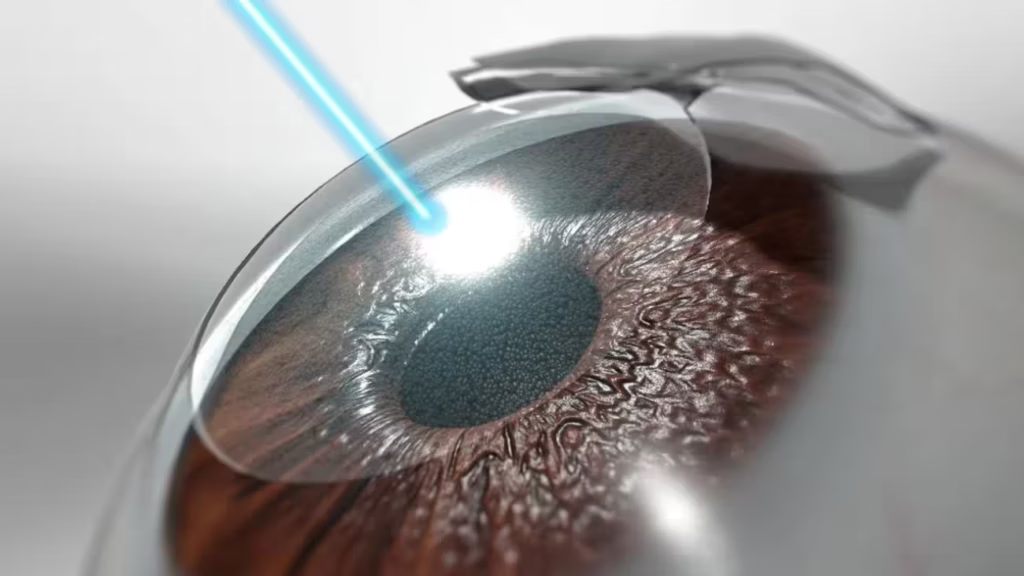
While LASIK creates a thick flap that involves both the epithelium and the underlying stroma, Epi-LASIK creates an ultra-thin epithelial flap using a mechanical separator. This flap contains only the outermost layer of the cornea—the epithelium—while the deeper stroma remains untouched. By avoiding the creation of a deep flap, Epi-LASIK minimizes structural disruption and lowers the risk of post-surgical complications.
How Epi LASIK Eye Surgery Works
The Epi-LASIK procedure combines precision, safety, and patient comfort. Here’s a step-by-step breakdown:
1. Numbing the Eye
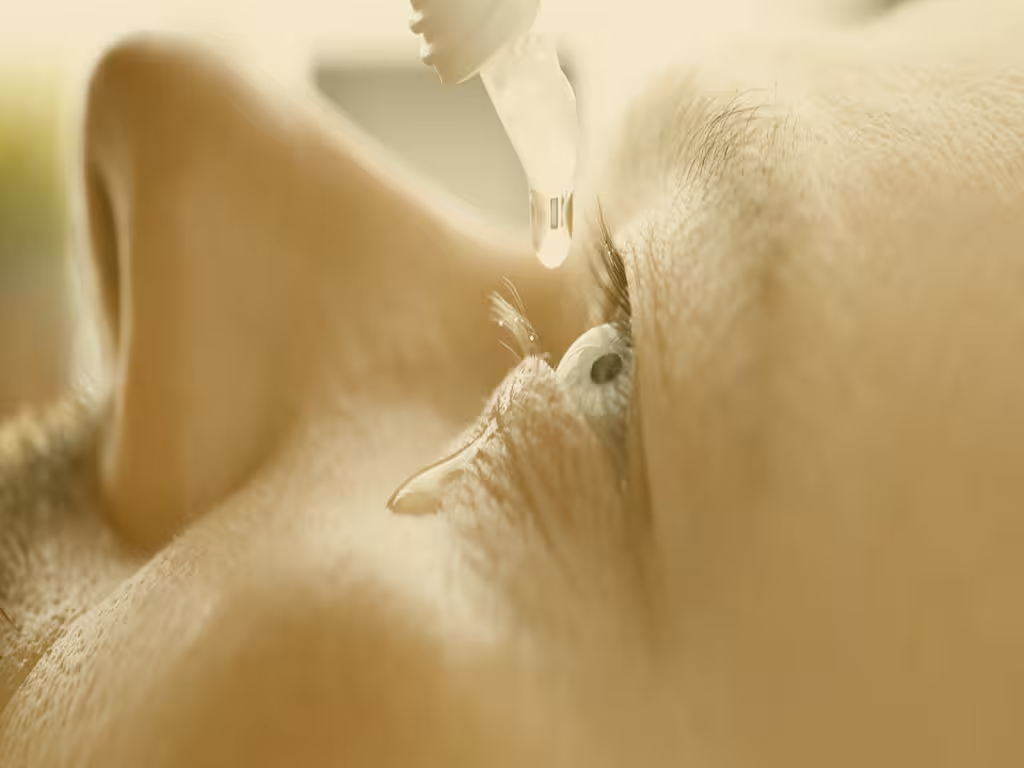
Before the procedure begins, your surgeon will apply anesthetic eye drops to ensure that you feel minimal discomfort. The eye is carefully prepared for the creation of the epithelial flap.
2. Flap Creation Using an Epithelial Separator
Unlike LASEK, which uses alcohol to loosen the epithelium, Epi-LASIK typically avoids alcohol solutions, reducing chemical toxicity to the cells. Instead, the surgeon uses a specialized instrument called an epithelial separator, which has a blunt, oscillating plastic blade. This tool gently separates the thin epithelial layer from the underlying stroma.
This mechanical, alcohol-free technique preserves the vitality of the epithelial cells, facilitating a faster and more natural healing process.
3. Laser Reshaping of the Cornea
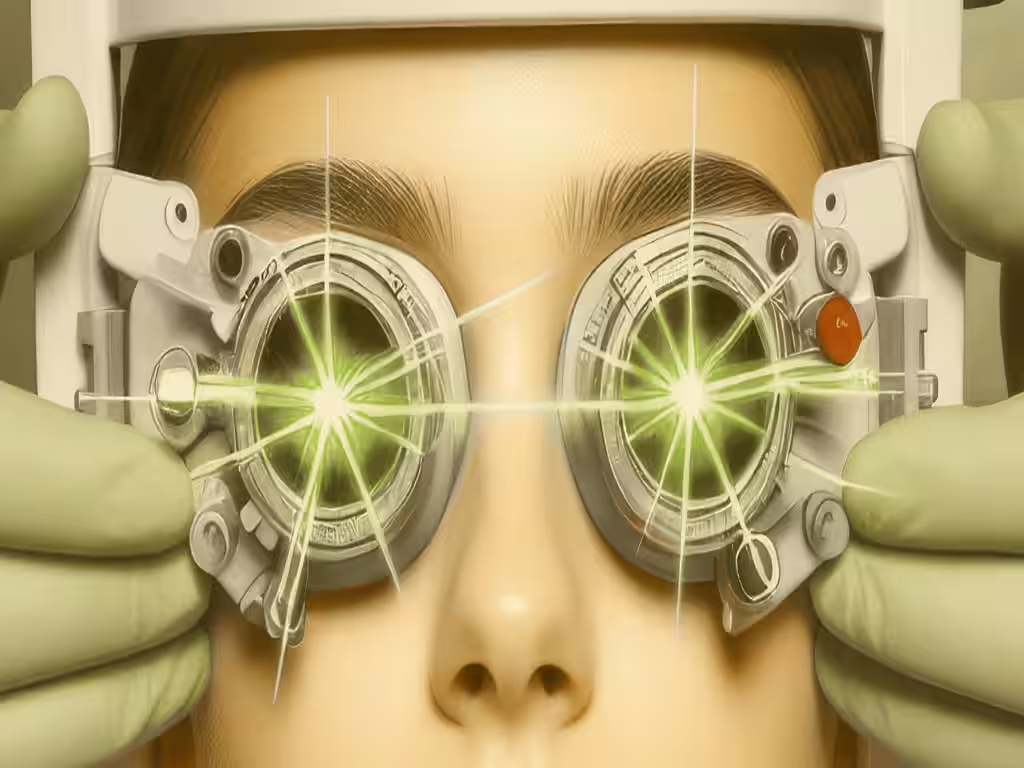
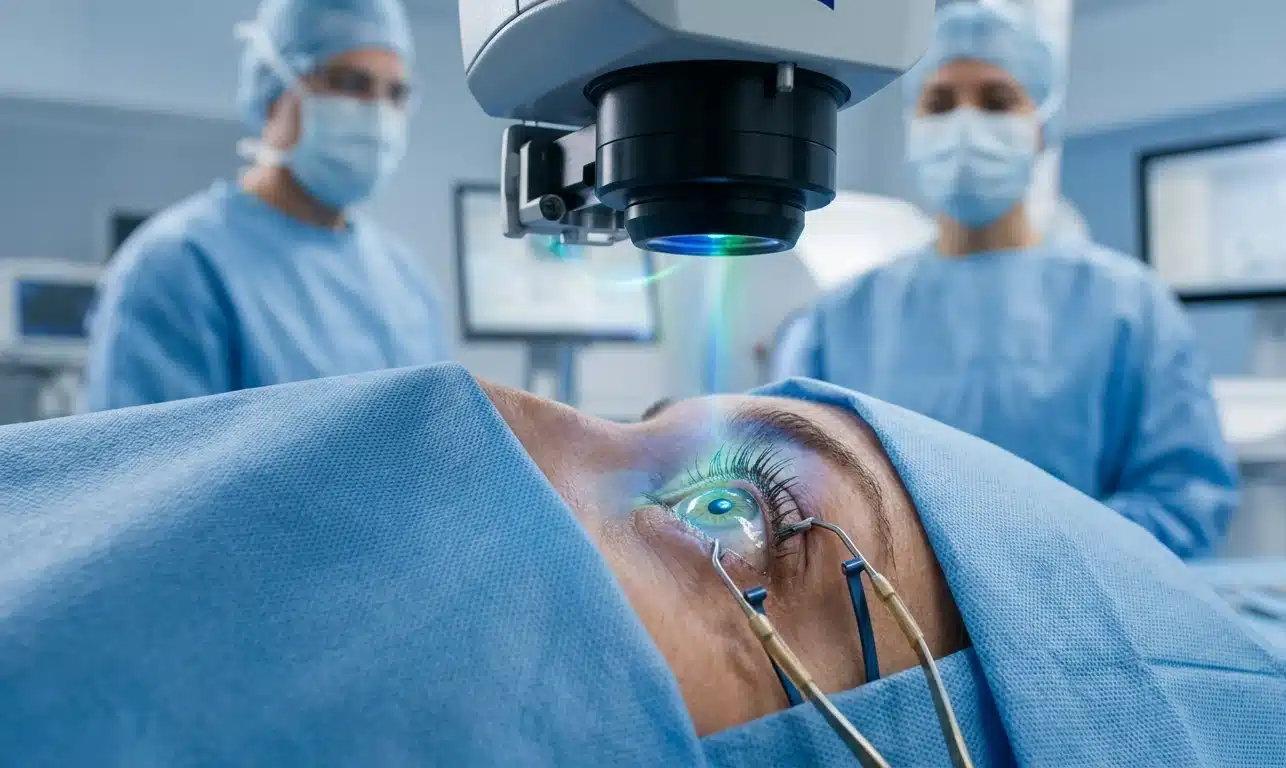
Once the thin flap is lifted, an excimer laser reshapes the underlying corneal tissue to correct your refractive error. This step is virtually identical to what happens in LASIK, but because the flap is ultra-thin, more of the cornea’s natural strength and structural integrity is preserved.
4. Bandage Contact Lens Application
After the laser treatment, the epithelial flap is repositioned, and a specialized soft contact lens is placed over the eye. This acts as a “bandage,” protecting the healing surface and helping new epithelial cells grow more quickly. The bandage contact lens is typically removed during a follow-up appointment 3–5 days after surgery.

Advantages of Epi LASIK Eye Surgery Over Traditional LASIK Eye Surgery
Epi-LASIK offers several benefits that make it an attractive alternative to LASIK, especially for certain patients:
1. Corneal Preservation
By limiting the flap to the epithelium, Epi-LASIK preserves the majority of the corneal stroma, reducing the risk of weakening the cornea. This makes it ideal for patients with thin corneas or borderline corneal thickness who may not be candidates for LASIK.
2. Flap Safety
Since there is no deep permanent flap, there is virtually no risk of flap displacement. This is particularly advantageous for athletes, military personnel, or anyone engaged in high-impact activities where eye trauma is a concern.
3. Alcohol-Free Procedure
Avoiding alcohol reduces chemical irritation and promotes healthier epithelial regeneration. This can result in faster healing and reduced post-operative discomfort compared to LASEK.
4. Reduced Discomfort Compared to PRK
Patients often report less discomfort than with PRK (Photorefractive Keratectomy) because the epithelial flap protects the cornea during the initial healing phase. Pain management is further improved by modern medications and post-operative care.
5. Excellent Visual Outcomes
Epi-LASIK provides comparable visual results to LASIK, including sharp, clear vision and reduced dependency on glasses or contact lenses.
Who is a Candidate for Epi-LASIK?
Not everyone is an ideal candidate for LASIK surgery, but Epi-LASIK broadens the pool of patients who can benefit from laser vision correction. Candidates typically include:
- Patients with thin corneas: Those whose corneal thickness is insufficient for a standard LASIK flap.
- High-risk lifestyles: Athletes, military personnel, law enforcement officers, or anyone at risk of eye trauma.
- Refractive errors: Patients with myopia, hyperopia, or astigmatism that can be safely corrected with laser reshaping.
- Dry eyes or other ocular concerns: Because Epi-LASIK is less invasive to the corneal nerves, it may reduce the risk of postoperative dry eye compared to LASIK.
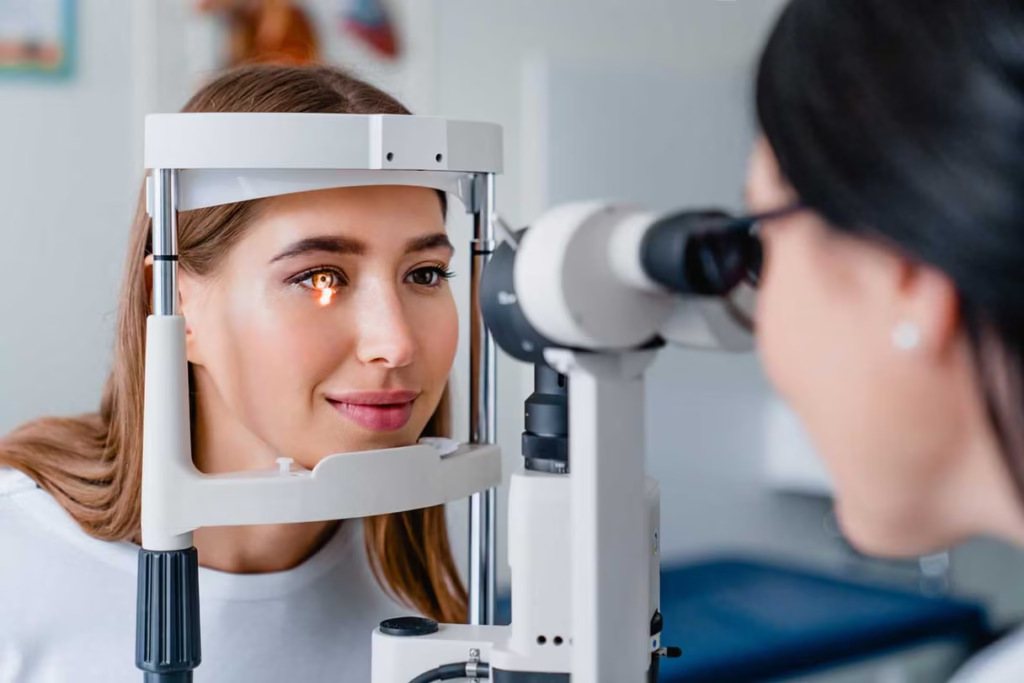
Before undergoing the procedure, your surgeon will perform a thorough eye examination, including corneal mapping, visual acuity testing, and measurement of corneal thickness. This ensures that Epi-LASIK is safe and appropriate for your eyes.

The Epi-LASIK Procedure: Step by Step
Epi-LASIK is an outpatient procedure, usually completed in under 30 minutes. Here’s what patients can expect:
Pre-Surgery Preparation
- Medical history review: Your surgeon will check for any conditions that may affect healing, such as diabetes or autoimmune disorders.
- Eye measurement: Corneal thickness, shape, and refractive error are carefully assessed.
- Anesthesia: Numbing drops are applied to ensure comfort during the procedure.
Surgery
- Flap creation: The epithelial separator gently lifts the thin epithelial flap.
- Laser correction: The excimer laser reshapes the cornea to correct refractive errors.
- Flap repositioning and bandage lens application: The flap is replaced and protected with a soft contact lens.
Post-Surgery Recovery
Recovery for Epi-LASIK is more gradual than LASIK because the surface layer needs time to regenerate.
- Visual milestones: Many patients achieve 20/40 or better vision within 3 days, though full stabilization may take 3–6 months.
- Medication: Strict adherence to prescribed eye drops is essential to prevent infection and promote healing.
- Follow-up visits: The bandage contact lens is removed at 3–5 days post-procedure, and additional check-ups ensure proper epithelial growth.
- Driving: Most patients can resume driving within one week, depending on visual clarity and comfort.
Comparing Epi-LASIK to LASIK
While both procedures correct refractive errors, several key differences exist:
| Feature | LASIK | Epi-LASIK |
| Flap thickness | Thick flap including stroma | Ultra-thin epithelial flap only |
| Corneal preservation | Less tissue conserved | Maximum tissue preservation |
| Flap displacement risk | Possible | Virtually none |
| Suitability for thin corneas | Limited | Excellent |
| Dry eye risk | Moderate | Reduced |
| Recovery time | Faster (often same day) | Slightly slower (days to weeks) |
| Post-op discomfort | Minimal | Mild to moderate, less than PRK |
For patients who are not ideal LASIK candidates, Epi-LASIK offers the benefits of a flap procedure while minimizing risks associated with corneal weakening and trauma.
Innovations and Advancements in Epi-LASIK
Epi-LASIK technology continues to evolve, with new techniques and devices enhancing outcomes and patient comfort:
- Advanced epithelial separators: Modern epikeratomes like the Moria Epi-K, EpiLift, and Centurion SES allow precise flap creation with minimal trauma.
- Alcohol-free surface ablation: Many surgeons now prefer mechanical separation to preserve epithelial cells.
- Pain management strategies: Topical NSAIDs, chilled saline, and other medications reduce post-operative discomfort.
- Improved laser mapping: Wavefront-guided and topography-guided lasers allow more precise correction of higher-order aberrations.
These innovations make Epi-LASIK increasingly popular among ophthalmologists who aim for safer, tissue-preserving alternatives to LASIK.

Benefits of Epi-LASIK for Specific Lifestyles
Epi-LASIK is particularly advantageous for patients with unique lifestyle or occupational needs:
- Athletes and high-impact sports enthusiasts: The absence of a deep flap reduces the risk of dislocation or trauma during physical activity.
- Military and law enforcement personnel: Ensures structural stability of the cornea while maintaining high-quality vision.
- Patients with thin corneas: Offers safe correction without compromising corneal integrity.
- Individuals with mild dry eyes: Preserves corneal nerves, minimizing the risk of post-operative dryness.
Risks and Considerations
Like all surgical procedures, Epi-LASIK carries some risks:
- Temporary visual fluctuations: Blurriness or haziness may persist until the epithelium fully regenerates.
- Dry eye: Mild dryness may occur but is generally less severe than with LASIK.
- Infection or inflammation: Rare but preventable with proper post-operative care.
- Under- or over-correction: May require enhancement or use of glasses/contact lenses.
Adherence to prescribed medications, follow-up visits, and lifestyle precautions are essential for minimizing complications and achieving optimal results.
Patient Experiences and Testimonials
Patients who undergo Epi-LASIK eye surgery often describe the experience as life-changing. While recovery is slightly slower than traditional LASIK, many report that the minimal risk of complications and the preservation of corneal integrity outweigh the short-term inconvenience.
Typical Patient Experience:
- Day of Surgery: Patients feel minimal discomfort due to anesthetic drops. The flap creation and laser reshaping take only minutes, and the procedure is virtually painless.
- First Few Days: Some mild irritation, tearing, or light sensitivity is common, but it is generally manageable with prescribed eye drops and over-the-counter pain relievers. The bandage contact lens ensures the eye remains protected during this period.
- First Week: Most patients regain functional vision, with many reaching 20/40 or better. Activities like reading, watching television, and computer use become comfortable. Driving may resume after about a week, once visual clarity improves.
- Long-Term Satisfaction: Patients appreciate the stability of their vision and reduced risks compared to LASIK, especially in terms of flap-related complications. Many report being able to participate in sports and physical activities without fear of injury.
Testimonials from eye clinic Dubai, like Ebsaar Eye Clinic, patients highlight that Epi-LASIK is particularly advantageous for those with thin corneas or occupations that require physical activity. Patients often note the peace of mind that comes from having a procedure designed to protect the structural integrity of the eye. Epi-LASIK offers safe, effective vision correction, ideal for thin corneas, high-impact lifestyles, and advanced laser eye care in Dubai.

Advanced Technology Behind Epi-LASIK
Modern Epi-LASIK procedures benefit from the latest in ophthalmic technology, making the surgery safer, faster, and more precise. Leading eye clinics in Dubai, like Ebsaar Eye Clinic, employ state-of-the-art lasers and instruments to ensure optimal outcomes.
Key Technological Advancements:
- Epikeratomes: Devices like the Moria Epi-K, EpiLift System, and Centurion SES allow surgeons to create a precise, uniform epithelial flap with minimal trauma. The smooth edges ensure faster epithelial healing and reduced discomfort.
- Excimer Lasers: These lasers reshape the corneal stroma with micron-level precision, correcting refractive errors such as myopia, hyperopia, and astigmatism while preserving corneal strength.
- Wavefront and Topography-Guided Systems: Advanced mapping technology enables the laser to account for individual variations in the cornea, improving visual outcomes and reducing higher-order aberrations like glare and halos.
- Digital Eye Tracking: Ensures the laser maintains perfect alignment with the eye even if the patient moves slightly during the procedure, enhancing safety and accuracy.
These technological improvements allow epi-lasik to deliver results comparable to LASIK surgery while maintaining the benefits of a surface ablation technique.
Aftercare and Recovery Tips
Recovery from Epi-LASIK eye surgery is gradual, and careful adherence to post-operative instructions ensures the best results.
1. Medication Compliance:
Use all prescribed eye drops, including antibiotics and anti-inflammatory medications, as directed by your ophthalmologist. Skipping doses may compromise healing and visual outcomes.
2. Protect Your Eyes:
Wear sunglasses to protect your eyes from UV exposure, which can interfere with healing and contribute to haze formation. Avoid rubbing your eyes, as this may disrupt the epithelial flap.
3. Limit Water Exposure:
For the first few days, avoid swimming or exposure to pool, spa, or tap water to minimize the risk of infection.
4. Rest and Sleep:
Adequate rest supports healing. Many patients benefit from taking short naps during the first day after surgery.
5. Monitor Vision:
Temporary fluctuations are normal. Keep track of your vision and report any unusual changes to your surgeon promptly.
6. Gradual Resumption of Activities:
- Reading, screen use, and light activities can often resume within a day or two.
- Driving typically resumes within 5–7 days.
- Strenuous exercise or contact sports should be postponed until your ophthalmologist confirms sufficient healing.
Why Epi-LASIK is Gaining Popularity
Over the past decade, Epi-LASIK has emerged as a preferred alternative for patients who may not be ideal candidates for traditional LASIK surgery. Its ability to preserve corneal tissue while still providing excellent visual outcomes makes it particularly appealing for those with thin corneas, irregular corneal shapes, or high-impact lifestyles. Unlike LASIK, which involves creating a deeper flap in the cornea, epi-lasik eye surgery focuses on the ultra-thin epithelial layer, significantly reducing the risk of flap-related complications and structural weakening of the cornea.
Another factor driving its popularity is patient comfort. While procedures like PRK can involve prolonged healing and discomfort, Epi-LASIK minimizes pain through the use of a protective bandage contact lens and alcohol-free flap creation. Modern post-operative care, including advanced eye drops and anti-inflammatory medications, further enhances the recovery experience.
Patients also appreciate the flexibility of Epi-LASIK. For individuals in professions or hobbies with a high risk of eye trauma—such as athletes, military personnel, or law enforcement officers—the absence of a deep flap provides an extra layer of safety while maintaining excellent vision correction.
Leading eye clinics in Dubai, like Ebsaar Eye Clinic, are now offering Epi-LASIK as part of their refractive surgery programs, often alongside LASIK and PRK options. These clinics combine experienced surgeons, advanced laser technology, and personalized pre- and post-operative care to deliver optimal outcomes.
Whether you are exploring LASIK surgery or seeking a safer alternative for vision correction, epi-lasik eye surgery offers a compelling option that balances effectiveness, safety, and recovery. For many patients, it represents the next generation of laser eye procedures, providing clear vision without compromising the structural integrity of the cornea.
The Future of Epi-LASIK
Epi-LASIK represents the renaissance of surface ablation procedures, combining the safety of PRK with some of the convenience of LASIK. As technology advances, patients can expect:
- Faster visual recovery with optimized laser and medication protocols.
- Enhanced precision with wavefront and topography-guided treatments.
- Improved comfort through refined surgical techniques and post-op care strategies.
Many ophthalmologists anticipate a continued shift toward surface ablation procedures like Epi-LASIK, especially for patients with thin corneas or high-risk occupations. Epi-LASIK provides precise, tissue-preserving vision correction, reducing flap risks, ensuring faster healing, and enhancing safety for active patients.
Choosing the Right Eye Clinic
Selecting the right eye clinic in Dubai, like Ebsaar Eye Clinic, is crucial for a successful Epi-LASIK experience. Look for clinics that:
- Offer experienced ophthalmologists with advanced training in surface ablation techniques.
- Utilize FDA-approved lasers and epikeratomes.
- Provide comprehensive pre- and post-operative care.
- Offer patient education and realistic expectations for outcomes.
A reputable Dubai eye clinic, like Esbaar Eye Clinic, will thoroughly evaluate your candidacy, explain alternatives, and ensure a smooth recovery process.
Key Takeaways
- Epi-LASIK is a safe and effective alternative to traditional LASIK for patients with specific corneal or lifestyle considerations.
- It involves creating an ultra-thin epithelial flap without alcohol, preserving corneal tissue and reducing chemical toxicity.
- Recovery is slightly slower than LASIK but faster than traditional PRK, with most patients achieving functional vision within a few days.
- Ideal candidates include those with thin corneas, high-impact professions, and standard refractive errors.
- Choosing a skilled eye clinic in Dubai, like Ebsaar Eye Clinic, is essential for successful outcomes.
For patients seeking a modern, tissue-preserving, and safe approach to laser eye surgery, Epi-LASIK offers an exciting opportunity to achieve clearer vision while minimizing risks associated with traditional LASIK.