




Small Incision Lenticule Extraction, or SMILE, represents a revolutionary advancement in laser vision correction. Often described as a “flapless” alternative to LASIK eye surgery, it combines the precision of modern laser technology with the structural benefits of corneal surface preservation. In an eye clinic Dubai, like Ebsaar Eye Clinic, SMILE is becoming a preferred choice for patients seeking excellent visual outcomes with minimal disruption to their lifestyle.
This comprehensive guide will explore what SMILE is, how it works, who it is suitable for, what to expect before and after surgery, potential risks, and how it compares to LASIK surgery.
What Is SMILE (Small Incision Lenticule Extraction)?

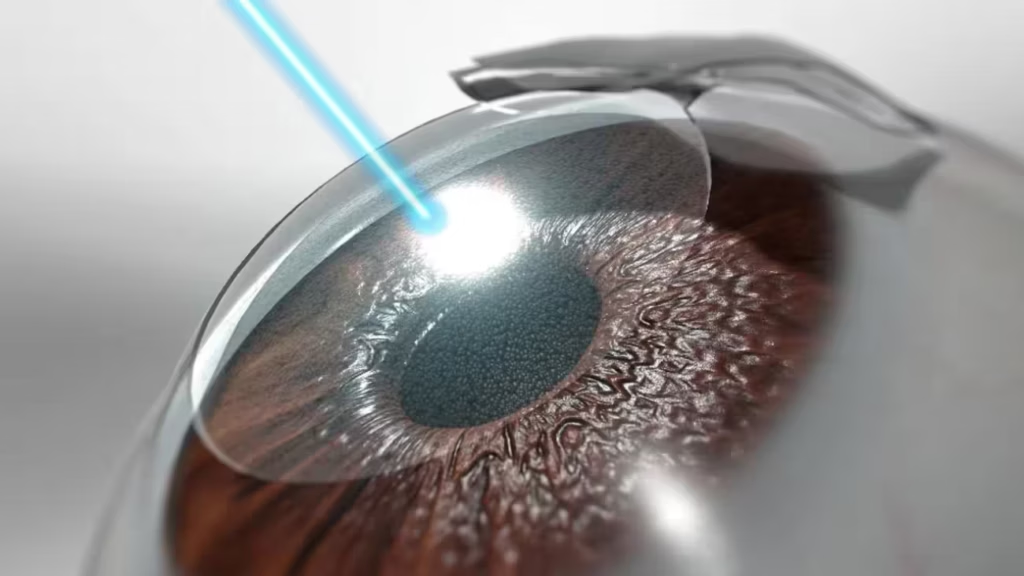
It is a minimally invasive laser refractive procedure that corrects myopia (nearsightedness) and astigmatism (irregular corneal shape). Unlike LASIK, which creates a corneal flap, SMILE reshapes the cornea through a tiny incision, leaving most of the corneal surface intact.
How It Works:
- A femtosecond laser sculpts a thin, disc-shaped layer of tissue called a lenticule inside the cornea.
- The laser then creates a small incision, typically less than 4 mm, through which the lenticule is removed.
- Removing the lenticule reshapes the cornea, allowing light to focus properly on the retina for clear vision.
Because the corneal flap is not created, it provides enhanced structural stability and reduces risks associated with flap-related complications.
Who Is a Good Candidate for SMILE?
It is ideal for patients who want effective laser vision correction with minimal disruption to the cornea. Candidates typically meet the following criteria:
- Age: 22 years or older
- Prescription Stability: Vision prescription unchanged for at least 12 months
- Prescription Range: Nearsightedness between -1.00 and -10.00 diopters, with up to 3.00 diopters of astigmatism
- Corneal Health: Healthy corneas with no scars or disease
- General Eye Health: Free from advanced glaucoma, uncontrolled diabetes, or other systemic conditions that may affect healing
- Realistic Expectations: Understanding that SMILE reduces dependence on glasses or contact lenses but may not guarantee perfect vision for all tasks
Who May Not Be Eligible:
- Patients with unstable or rapidly changing vision
- Those with excessive scarring or keloid formation
- Individuals with prior significant eye surgery or disease
- Pregnant or nursing women (temporary restriction)
A detailed pre-operative evaluation by an ophthalmologist is essential to confirm candidacy.
The SMILE Procedure: Step by Step
1. Pre-Surgery Evaluation
Your ophthalmologist conducts a comprehensive eye exam to ensure you are a good candidate. This includes:
- Vision testing: Confirms prescription stability and assesses the degree of nearsightedness or astigmatism.
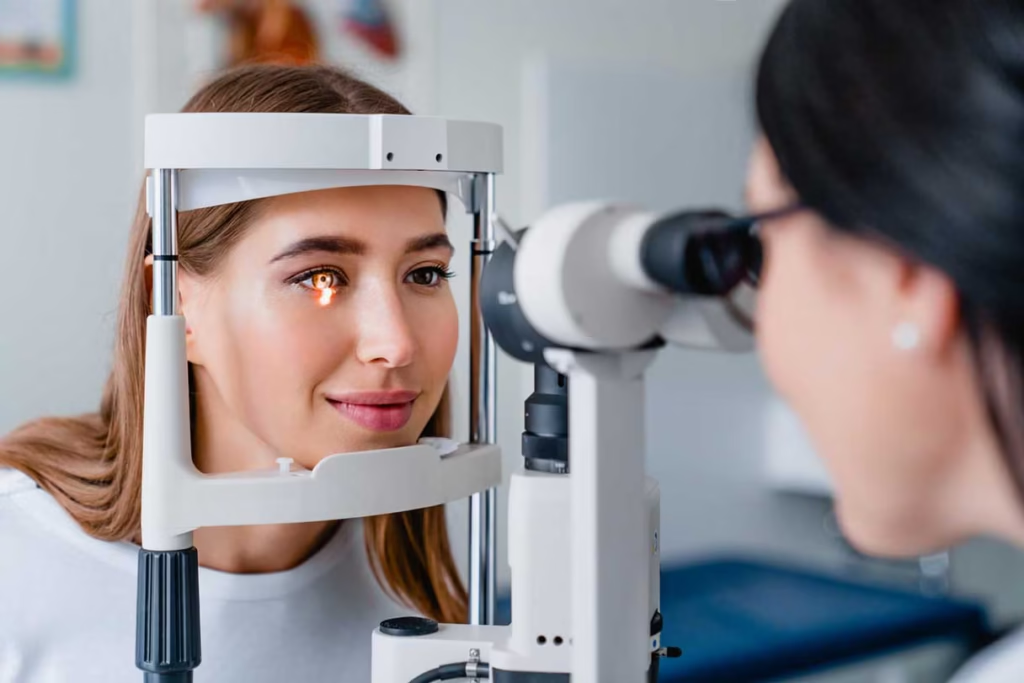
- Corneal mapping: Measures corneal thickness and shape to customize laser treatment.
- Eye health assessment: Checks for dry eye, glaucoma, or other conditions that may affect results.
- Lifestyle discussion: Helps determine the patient’s goals and set realistic expectations for outcomes.
2. During the Surgery
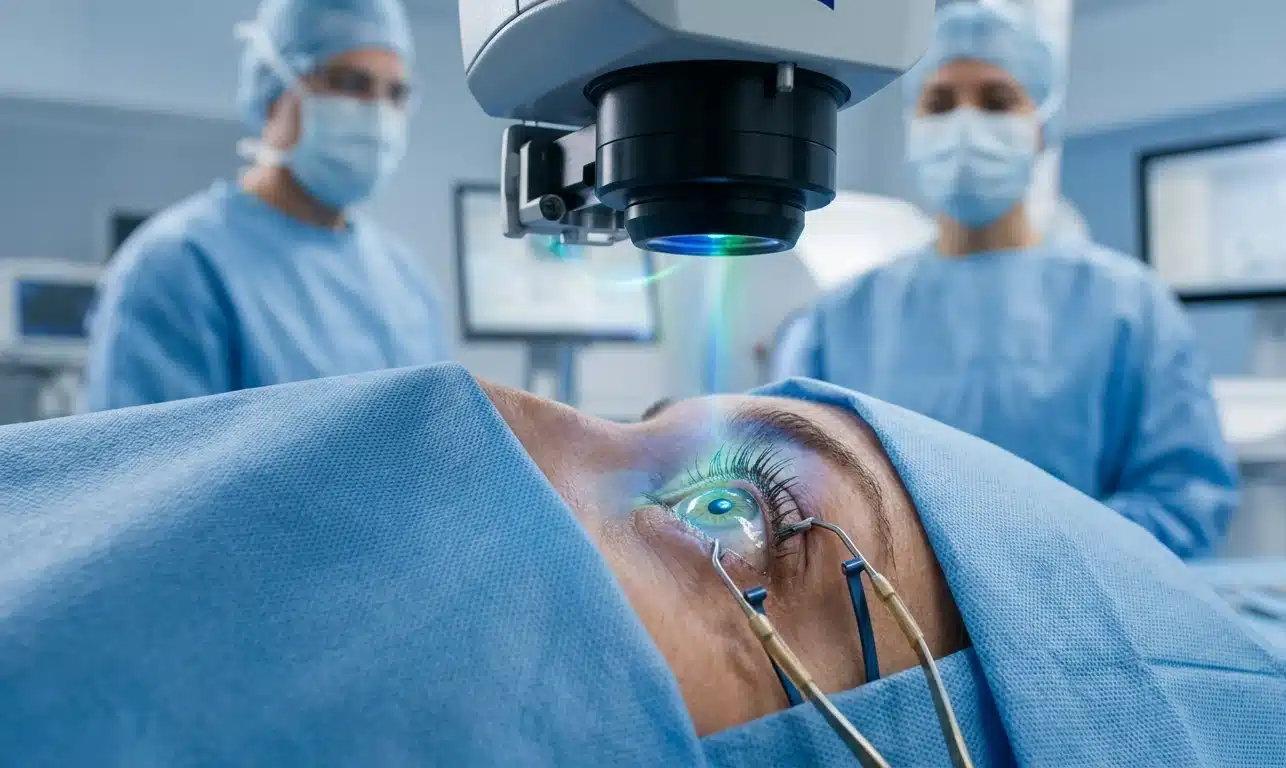
It is an outpatient procedure that usually takes 10–15 minutes for both eyes. The steps include:
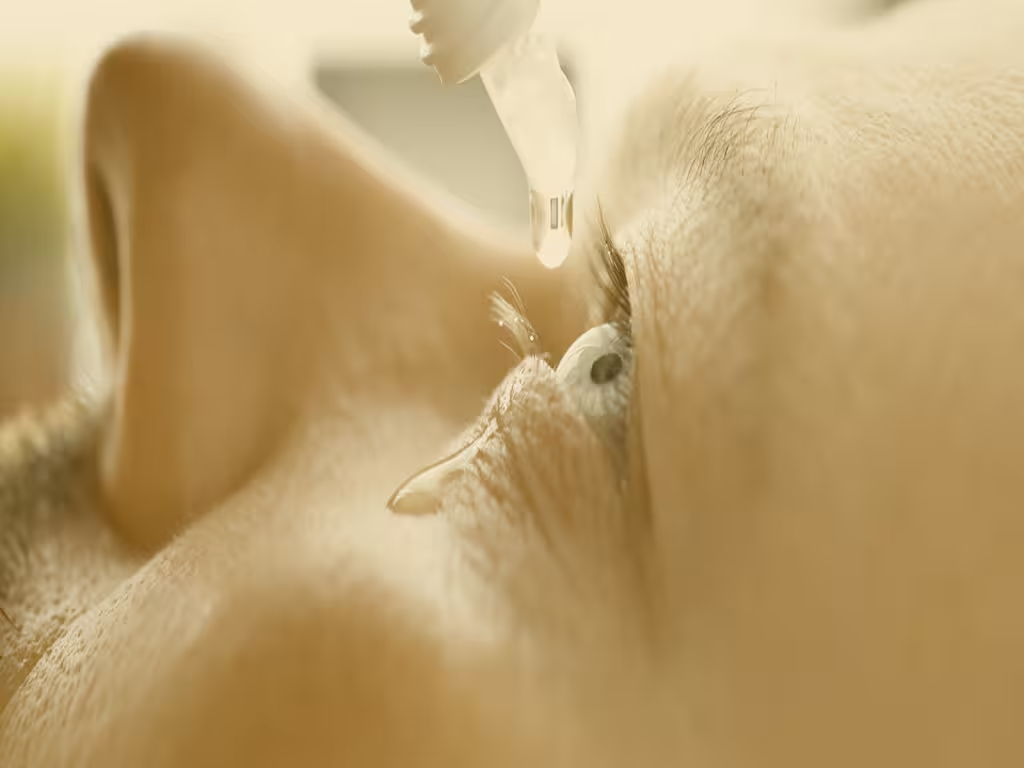
- Numbing: Anesthetic eye drops are applied to ensure comfort.
- Eyelid stabilization: A soft eyelid holder prevents blinking.
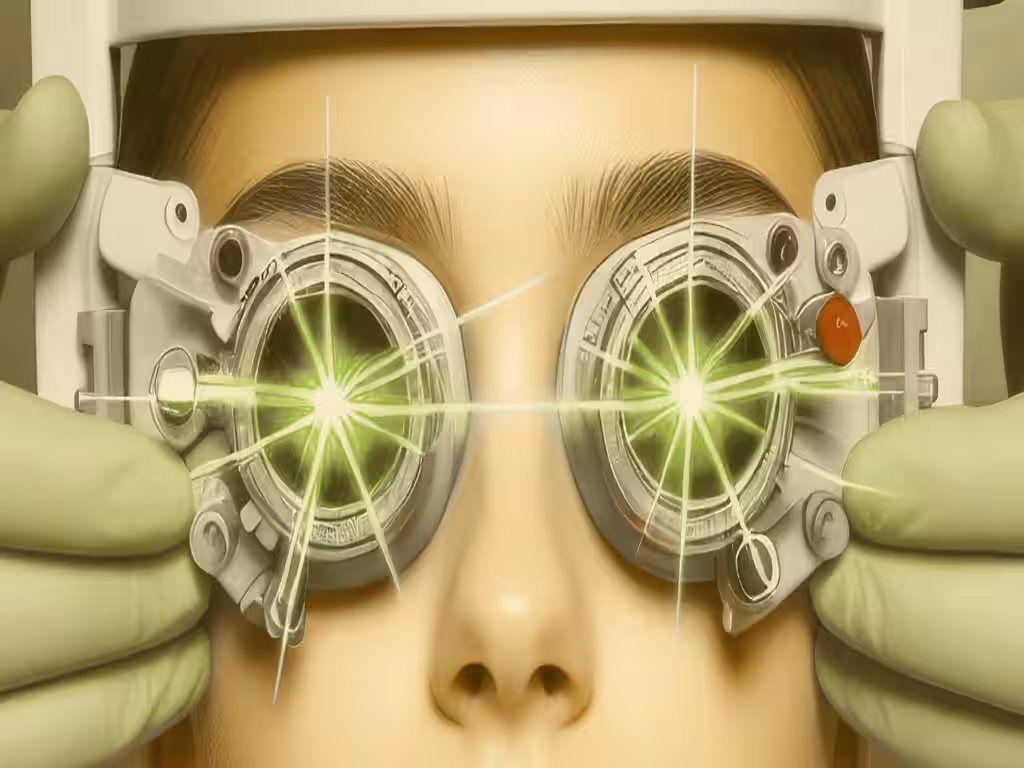
- Suction ring placement: Stabilizes the eye while the femtosecond laser sculpts the lenticule.
- Lenticule creation: The laser forms a precise disc-shaped layer inside the cornea, tailored to the patient’s prescription.
- Keyhole incision: A small incision (less than 4 mm) is made on the corneal surface.
- Lenticule removal: The surgeon carefully removes the lenticule through the incision, reshaping the cornea.
- Completion: No flap repositioning is required, reducing the risk of flap complications.
Most patients describe feeling only slight pressure during the laser phase, and the procedure is relatively quiet and gentle.
3. Recovery and Aftercare
Recovery is generally faster and more comfortable than PRK and less disruptive than LASIK. Typical post-operative care includes:
Day 1–2:
- Most patients can resume normal daily activities.
- Rest and minimize eye strain immediately after surgery.
First Week:
- Prescription eye drops help prevent infection and control inflammation.
- Avoid rubbing the eyes or exposing them to water.
Visual Improvement:
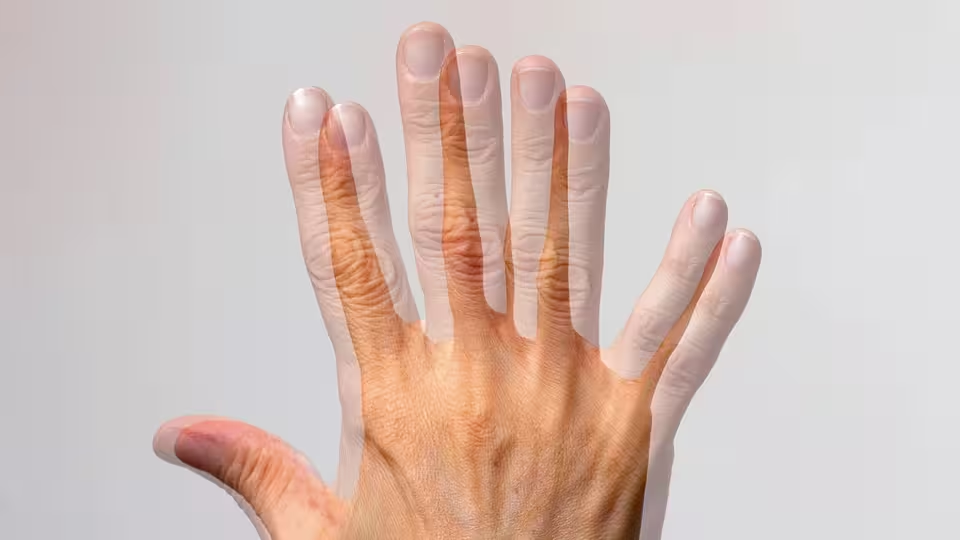
- Vision may be slightly hazy at first but usually clears within a few days.
- Full stabilization of vision occurs over several weeks.
Activity:
- Light exercise and normal routines can typically resume sooner than after LASIK eye surgery.
- Patients are advised to wear sunglasses outdoors to protect healing tissue and reduce glare.
Advantages of SMILE Over LASIK Eye Surgery
1. Flapless Technology:
Since no corneal flap is created, there is no risk of flap displacement. This is particularly beneficial for athletes, military personnel, or anyone with an active lifestyle.
2. Reduced Dry Eye Risk:
It preserves corneal nerves, reducing the likelihood of post-surgical dry eye symptoms compared to LASIK.
3. Structural Integrity:
The majority of corneal tissue remains intact, maintaining natural biomechanical stability.
4. Faster Recovery:
The small incision allows rapid healing, often enabling patients to return to daily activities within a day or two.
5. High-Precision Visual Outcomes:
It provides comparable visual results to LASIK, correcting myopia and astigmatism effectively.
Risks and Potential Complications of SMILE
While it is safe and effective, like any surgical procedure, it carries potential risks:
Common, Temporary Side Effects:
- Mild light sensitivity
- Glare or halos, especially at night
- Temporary blurry vision
- Minor dry eye symptoms
Less Common Risks:
- Infection at the incision site
- Inflammation in the treated area
- Residual refractive error requiring enhancement (usually via surface PRK)
Rare, Severe Risks:
- Permanent loss of best-corrected vision
- Very rare instances of blindness
Proper patient selection, surgical expertise, and adherence to aftercare instructions significantly reduce these risks.
SMILE vs. LASIK Eye Surgery
| Feature | SMILE | LASIK |
| Corneal Flap | None | Yes |
| Dry Eye Risk | Lower | Higher |
| Recovery | Rapid | Rapid (slightly longer) |
| Long-Term Stability | Excellent | Excellent |
| High-Impact Suitability | Ideal | May be risky |
| Prescription Range | Myopia & Astigmatism | Myopia, Hyperopia & Astigmatism |
Both procedures are highly effective, and the choice depends on anatomy, lifestyle, and personal preference. An experienced ophthalmologist can guide patients to the safest, most effective option.

SMILE for Active Lifestyles
One of the biggest advantages is its suitability for physically active individuals. Since there is no corneal flap, the risk of dislodgement is eliminated, making it ideal for:
- Professional athletes
- Martial artists and boxers
- Military and law enforcement personnel
- Firefighters or first responders
- Anyone engaged in high-impact hobbies or jobs
SMILE and Corneal Health
Corneal thickness is critical in determining eligibility for laser vision correction. LASIK requires sufficient thickness to create a flap safely, which can exclude some patients. SMILE, by reshaping the cornea internally through a small incision, preserves more tissue and allows patients with thinner corneas to benefit from refractive surgery safely.

Long-Term Results and Stability
Research and clinical experience show that SMILE provides excellent long-term visual outcomes:
- High patient satisfaction rates
- Stable vision over time
- Low regression rates when patients are properly selected
Many patients enjoy clear, reliable vision for years after the procedure, making it a dependable long-term solution.
SMILE and Enhancements
Some patients may require minor refinements due to under-correction or over-correction. Enhancements are generally straightforward, often performed with surface-based PRK. Most patients, however, achieve excellent results after a single procedure.

Lifestyle Benefits of SMILE
Beyond vision correction, it can significantly improve quality of life:
- Freedom from glasses or contacts during sports and exercise
- Convenience for travel and daily routines
- Increased confidence in appearance and visual function
- Fewer limitations in occupational settings
Setting Realistic Expectations
While it is highly effective, it is important to understand that:
- Healing takes time; initial vision may be hazy
- Glasses may still be required for specific tasks, such as night driving
- Age-related near vision loss (presbyopia) is not prevented
- Monovision options can address near-vision changes but require careful consideration
Clear communication between patient and ophthalmologist ensures satisfaction with outcomes.
The Role of Advanced Diagnostics in SMILE
Modern procedures use cutting-edge diagnostics to maximize accuracy:
- Corneal topography: Maps corneal shape and thickness
- Wavefront analysis: Detects subtle vision irregularities
- High-resolution imaging: Guides laser customization for precise treatment
These technologies enhance safety, predictability, and visual quality.
SMILE vs Other Laser Vision Correction Procedures
It is often compared to LASIK and PRK because all three are laser-based vision correction procedures, yet each has unique advantages and considerations. Understanding these differences can help patients and ophthalmologists select the most suitable option for individual eye anatomy, lifestyle, and long-term goals.
Comparison with LASIK
While LASIK creates a corneal flap and reshapes tissue underneath, SMILE preserves the anterior corneal layers and reshapes the eye via a tiny incision. This flapless approach reduces the risk of flap-related complications, such as dislocation or infection, making it ideal for patients involved in contact sports, military service, or high-impact professions.
Additionally, it tends to induce less post-operative dry eye than LASIK because fewer corneal nerves are disrupted during the procedure. However, LASIK may provide slightly faster visual recovery in some patients, with clearer vision often noticeable the day after surgery. SMILE typically requires a few days for optimal clarity to develop.
Comparison with PRK
PRK, like SMILE, avoids a flap and preserves corneal integrity, but it works on the surface of the cornea. This means initial recovery is slower than SMILE, with discomfort often lasting several days, whereas SMILE’s keyhole incision allows quicker visual rehabilitation and minimal post-operative pain. Both PRK and SMILE are excellent choices for patients with thin corneas or those prone to corneal trauma, but SMILE’s recovery timeline is usually shorter and more comfortable.
By understanding these differences, patients can make informed decisions with their ophthalmologist about the procedure that aligns best with their anatomy, lifestyle, and visual expectations.
Advanced Candidate Considerations
While basic eligibility for it includes age, stable prescription, and corneal health, several other factors influence candidacy and surgical outcomes.
Corneal Curvature and Thickness
Patients with highly irregular corneas may require additional testing to ensure SMILE can safely correct vision. The procedure is designed for mild to moderate myopia (up to -10.00 diopters) and astigmatism (up to 3.00 diopters). For patients outside these ranges, alternative procedures like LASIK or PRK may be more suitable.
Dry Eye Management
Though it reduces the likelihood of post-operative dry eye compared to LASIK, pre-existing dry eye should still be assessed. Treatments such as lubricating drops, punctal plugs, or prescription eye drops may be recommended before surgery to optimize healing and comfort.
Lifestyle and Occupational Needs
Patients in professions with high risk of eye trauma—athletes, military personnel, or first responders—benefit from SMILE’s structural stability. Similarly, individuals with hobbies such as martial arts, skiing, or rock climbing can safely undergo the procedure with a lower risk of complications than LASIK.
Long-Term Eye Health Considerations
Ophthalmologists will also consider general eye health, including glaucoma risk, retinal health, and lens clarity. Pre-existing eye conditions may affect surgical planning or indicate that SMILE is not the optimal procedure.
The Technology Behind SMILE
SMILE relies on cutting-edge femtosecond laser technology that allows ophthalmologists to perform highly precise, minimally invasive corneal reshaping. Key technological aspects include:
Femtosecond Laser Precision
This laser creates the lenticule inside the cornea with micron-level accuracy. By sculpting tissue beneath the surface, the laser minimizes disruption to the surrounding corneal structure, ensuring precise correction of nearsightedness and astigmatism.
Computer-Guided Mapping
Before surgery, ophthalmologists use high-resolution corneal imaging and topography to map the unique curvature and thickness of each eye. This customized approach allows the laser to target only the exact amount of tissue needed for optimal refractive correction.
Real-Time Eye Tracking
Modern SMILE platforms track eye movements in real time to ensure that the laser precisely follows the intended treatment area, enhancing safety and visual outcomes.
Minimally Invasive Approach
By using a single small incision, SMILE avoids creating a corneal flap, preserves corneal biomechanics, and maintains the natural strength of the eye. This precision technology contributes to fewer complications, faster recovery, and reduced post-operative dryness.
SMILE Recovery and Post-Operative Care
Recovery from SMILE is generally rapid, but careful post-operative care is essential to ensure optimal outcomes.
Immediate Post-Surgery
Most patients experience mild pressure or irritation for a few hours after surgery. Vision may appear slightly blurry initially, and it is recommended to rest and avoid strenuous activity for the remainder of the day.
Eye Drops and Medication
Ophthalmologists prescribe antibiotic and anti-inflammatory drops to prevent infection and reduce inflammation. Following the prescribed regimen is critical for proper healing and minimizing complications.
Return to Daily Activities
Unlike LASIK, which may require a few days of caution to protect the flap, SMILE patients can typically resume non-contact daily activities within 24–48 hours. Physical activity can often resume sooner than after PRK, though patients should still avoid swimming or rubbing the eyes for a few days.
Visual Stabilization
Vision usually improves significantly within the first few days but can take a few weeks to fully stabilize. Night vision and contrast sensitivity continue to improve gradually, providing clearer, sharper vision as healing progresses.
Benefits of SMILE
SMILE offers numerous advantages that make it a compelling alternative to traditional LASIK eye surgery:
Flapless Safety
By avoiding the creation of a corneal flap, SMILE eliminates flap-related risks such as dislocation or infection. This makes it particularly suitable for patients with active lifestyles or high-impact professions.
Reduced Dry Eye Symptoms
Because fewer corneal nerves are disrupted, SMILE lowers the risk of long-term dry eye, enhancing patient comfort compared to LASIK.
Structural Stability
The cornea’s anterior layers remain largely undisturbed, preserving the eye’s natural biomechanical strength.
Rapid Recovery
Most patients notice improved vision within a few days, and normal activities can resume quickly.
Predictable Outcomes
SMILE has demonstrated highly consistent results for eligible patients, with visual outcomes comparable to LASIK for nearsightedness and astigmatism.
Risks and Considerations
Like any surgical procedure, SMILE carries potential risks, though complications are rare when performed by experienced ophthalmologists.
Common Temporary Side Effects:
- Mild discomfort or pressure in the first few hours
- Light sensitivity
- Temporary glare or halos around lights
Less Common Risks:
- Infection
- Inflammation within the treated area
- Residual refractive errors requiring enhancement procedures
Rare Serious Risks:
- Loss of best-corrected vision
- Significant visual complications
Careful patient selection, adherence to post-operative instructions, and experienced surgical care minimize these risks and optimize long-term outcomes.
Long-Term Outcomes of SMILE
Long-term studies and clinical experience show that SMILE provides stable, reliable visual outcomes. Patients generally report:
- Sustained improvement in nearsightedness and astigmatism
- Minimal regression over time
- High satisfaction with visual quality, particularly in low-light conditions
- Lower incidence of chronic dry eye compared to LASIK
SMILE’s long-term benefits make it an appealing option for patients seeking both safety and excellent visual clarity.
Lifestyle and Quality of Life Benefits
Beyond improved vision, SMILE can significantly enhance lifestyle convenience and comfort:
- Freedom from glasses during sports and exercise
- Reduced dependency on contact lenses during travel or outdoor activities
- Greater ease performing daily tasks such as driving, reading, or working on digital devices
For patients with active routines or physically demanding jobs, SMILE offers both safety and practicality without compromising visual performance.
Choosing the Right Eye Clinic
SMILE is a sophisticated procedure requiring highly trained ophthalmologists and advanced laser platforms. When seeking SMILE in Dubai, consider clinics, like Ebsaar Eye Clinic, that offer:
- Experienced, board-certified ophthalmologists
- State-of-the-art femtosecond lasers
- Comprehensive pre- and post-operative care
- High standards of patient safety and comfort
Final Thoughts: Is SMILE Right for You?
It is an innovative, reliable, and minimally invasive laser vision correction procedure. It is especially suitable for patients seeking:
- Flapless surgery
- Rapid recovery
- Reduced dry eye risk
- Long-term corneal stability
The best way to determine if SMILE or LASIK eye surgery is right for you is through a thorough consultation with a qualified ophthalmologist. With proper evaluation and realistic expectations, SMILE can deliver excellent long-term visual results and a meaningful improvement in lifestyle.